
The Iran Conflict Is Disrupting More than Oil

In an interview on Monday with CBS News, President Donald Trump said the U.S.-Israeli war with Iran could be soon over. He said, “I think the war is very complete, pretty much. (Iran has) no navy, no communications, they’ve got no air force. Their missiles are down to a scatter. Their drones are being blown up all over the place, including their manufacturing of drones."
However, later on Monday, he said that the U.S. would strike harder if Iran disrupted the world’s energy supply. And on Tuesday, defense secretary Pete Hegseth said during a press conference, “We will not relent until the enemy (Iran) is totally and decisively defeated, but we do so on our time line and at our choosing.”
Meanwhile, industries, companies and supply management organizations are trying to understand what all the uncertainty means to them. Will they have to pay more for shipping? Will they have to reroute shipments? What does this mean to product and material availability? How high will oil and gas prices rise? Will consumers hold back on buying due to higher gas prices?
The oil and gas situation is perhaps one of the biggest uncertainties underlying the war. That’s because it doesn’t just pertain to production, said Edmund Zagorin, founder and chief strategy officer at Arkestro. It’s moving oil as well as soaring prices, he said in a statement: “When prices go up, costs go up across the board. Enterprises are diversifying suppliers and prioritizing speed in shifting demand to less-impacted supply channels.”
The price of tankers has significantly increased due to this event, Zagorin noted. “The cost of moving oil is a lot higher than it used to be, in some cases close to 20 percent of the commodity price is now transportation,” he said. “This means that the shorter the supply chain of energy, the higher the margins.”
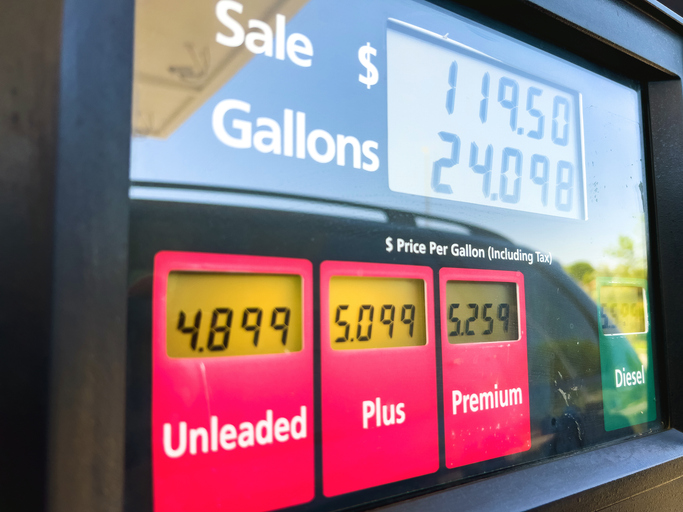
Consumers have noticed at the gas pump: In the past week, according to AAA, the average price per gallon has risen 43 cents. On Monday, oil reached nearly US$120, before falling: Crude oil dropped about 15 percent to around $80 a barrel, while Brent crude dropped 14.4 percent to $84.69 a barrel, CBS reported.
Shipping cancellations are adding to the cost, price and availability of oil, gas and energy. After the attack on Iran, import container cancellations through the Strait of Hormuz began to stack up. Dun & Bradstreet (D&B) reported that on March 3 alone, 21,762 20-foot equivalent units (TEUs) were cancelled — that’s more than double any single-day total recorded since early 2024.
New import bookings have also collapsed. D&B reported that from March 1-3, import booking volumes fell 59 percent compared to the prior week, while cancellations jumped 364 percent.
“Export shipments from the Gulf are also slowing as uncertainty rises,” the D&B report stated. “Export bookings have dropped more than 40 percent since mid-February, and on March 3, cancellations exceeded bookings for the first time, with 1,319 TEUs cancelled versus 1,095 booked, a signal that exporters are beginning to pause shipments as regional tensions escalate.
On March 5, D&B posted on social media that shipping disruption/booking cancellations on the Strait of Hormuz extends beyond oil to such industries as wholesale trade, transportation services, food and chemicals.
D&B's proprietary data shows the shipping disruption through the Strait of Hormuz extends beyond the oil industry. Real‑time visibility helps governments, lenders and businesses understand where the pressure is building.
— Dun & Bradstreet (@DunBradstreet) March 5, 2026
Request a strategy session: https://t.co/5l9WViFsil pic.twitter.com/2yGzknh0HG
“The Strait of Hormuz is a critical global shipping route affecting food, medical and electronics industries,” Zagorin noted. “The largest impact of a closure would drive up global oil, fuel, and commodity prices across the economy.”
Stephen Dyke, principal solutions consultant manager at FourKites, said in a statement that booking concerns extend beyond the Strait of Hormuz to the Suez Canal and elsewhere. “For U.S. importers, the immediate question is what happens to booking availability and lead times on their core Asia-origin lanes over the next two to four weeks,” he said.
Experts recommend that supply chain organizations:
- Ensure supplier visibility and traceability across all tiers of suppliers
- Map supplier networks to identify and avert risk
- Consider alternate suppliers or sourcing closer to home to reduce shipping disruption
- Communicate with the C-suite and gain executive buy-in
- Implement technology can help mitigate risk and uncertainty.
(Photo credit: Getty Images/Eyecrave Productions)