

Follow the Barrel: The Next Oil Shock Is Hitting Downstream

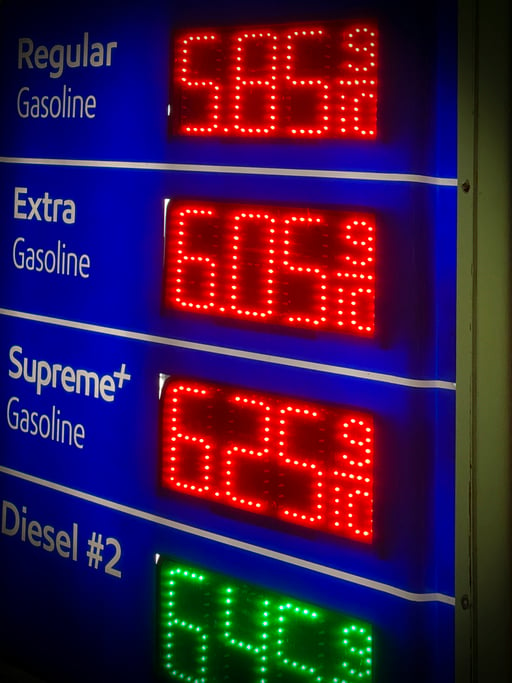
The average cost of diesel reached an all-time high of US$6.23 a gallon on Monday, according to AAA, the latest pain point in an energy price shock stemming from the six-month war in Iran and the squeezing of another vital shipping route in the last week.
For supply management organizations, the biggest concern goes far beyond what drivers and shipment carriers are paying at the pump: The escalating numbers on a gas station sign are a sobering indication of the increasingly fragile system behind the movement of goods.
Diesel powers the vast majority of U.S. freight trucks, along with trains, tractors and other industrial equipment. Crops must still be harvested and orders that have been placed by customers delivered, even when prices rise.
“Diesel is the blood of the economy. It’s the engine in which you move (food and) agricultural goods from the farm to the supermarket,” Jaime Brito, executive director, refining and oil products research at Dow Jones Energy, told NPR.
Tensions in the Middle East are layering the problem.
While months-long disruptions at the Strait of Hormuz continue, Iranian-backed Houthi militants in Yemen seized both the strategic port city of Mokha and Perim Island adjacent to the Bab al-Mandeb Strait, a choke point in the Red Sea.
Meanwhile, Saudi Arabia announced that the 745-mile East-West Pipeline, which had been critical to crude oil traffic bypassing the Strait of Hormuz, was damaged in an attack and will be out of service, possibly for weeks.
These developments helped send Brent crude oil more than $105 a barrel on Monday. Of course, crude oil isn’t put in tanks; it must be refined into such products as diesel, gasoline and jet fuel. And that process could be the most critical bottleneck.
“The global constraint with energy prices isn’t in crude oil, it’s in refined products, especially diesel,” Jason Miller, Ph.D., Eli Broad endowed professor of supply chain management at Michigan State University in East Lansing, Michigan, wrote on LinkedIn. “This problem isn’t going to resolve itself in a few weeks.”
A Matter of Timing
In the U.S., there is no magic button to push to make refineries run harder.
On LinkedIn, Miller cited data from the federal Energy Information Administration (EIA) indicating that American refineries are running at 98-percent utilization, meaning there isn’t much additional capacity available to make up for lost production elsewhere.
Despite that rate, diesel inventories are 11.4 percent lower year over year. Distillate exports are up 20 percent from a year ago, further limiting the ability to replenish inventories, especially before refinery maintenance occurs in the fall.
About 7 million barrels a day of refining capacity is offline across the Middle East and Asia, due to the conflict in Iran and Russia’s refining capacity limited by strikes from Ukraine. (Russia had previously banned diesel exports at least through September.)
Additionally, China’s refining capacity is at its lowest levels since the coronavirus pandemic. For Beijing, that was a defense mechanism: China, the world’s biggest oil importer, began safeguarding supply in hopes of mitigating the impact of elevated energy prices.
“It’s very complicated,” Patrick De Hann, GasBuddy head of petroleum analysis, told Bloomberg. “I don’t think I’ve seen a year where there’s been so (many events) being so impactful to prices, and in different ways.”
He added, “The Ukraine-Russia situation is impacting diesel more broadly, and Middle Eastern refineries that could step in are stuck behind the Strait of Hormuz. And there is the East-West Pipeline to contend with as well. So, we’re getting hit on the foundation of the price of oil, gas and diesel.”
The calendar isn’t favorable. Harvest season in the U.S. begins soon, and Dale Hemminger, who operates a Seneca Castle New York-based dairy and cabbage farm, told NPR that 10,000 gallons of diesel fuel will cost $45,000, an 80-percent increase over last year.
“It’s really, really putting a pinch on things,” he said. “We can’t just pass it on, so we have to weather the storm.”
In addition to agricultural demand, heating-oil use will increase as winter approaches. Also, refineries traditionally conduct maintenance in the fall; many delayed that process earlier in the year because they wanted to keep producing. Fewer facilities will be likely to continue postponing maintenance, which increases the risk of an equipment breakdown.
Whether the market has the ability to absorb the increased demand and refinery slowdowns remains to be seen.
The Cost of the Workaround
The market has found ways to keep oil moving despite the disruptions, but those alternatives are becoming increasingly expensive.
Crude through the East-West Pipeline (which typically handles about 4 million barrels a day) avoids the Strait of Hormuz but is still dependent on the Bab al-Mandeb Strait. If that waterway is pinched, vessels must be rerouted around Africa, adding at least four weeks to some tanker journeys and increasing freight and insurance costs.
And if the pipeline is disabled, it’s not an option at all.
“Workarounds like the East-West Pipeline have been crucial for keeping prices in check,” Ramanan Krishnamoorti, Ph.D., a professor of petroleum engineering at the University of Houston, told ABC News. “We’ll see prices rise after this.”
The largest crude carriers also face restrictions when using the Suez Canal, as depth restrictions require them to unload and reload portions of their cargo.
For supply management organizations, this is the less-visible side of an energy shock. The oil can still move, but getting it where it needs to go takes longer and costs more. Every workaround introduces another variable into transportation costs, lead times and the landed cost of goods — and somewhere along the line, those increases must be absorbed.
Carriers can add fuel surcharges, which is happening, Miller wrote on LinkedIn. “I wouldn't be surprised if this practice doesn’t become more widespread over the next few weeks,” he added.
Suppliers can seek price adjustments, and manufacturers can attempt to absorb higher transportation and input costs to protect customers and margins. But not every business has the leverage to pass along an increase, as the experience of Hemminger, the New York farmer, illustrates.
For now, three variables will be worth watching closely: (1) diesel inventories, (2) refinery operations and (3) Middle Eastern shipping routes. If inventories remain depleted as refineries enter maintenance season, while disruptions continue to restrict the movement of crude and refined products, another shock will become increasingly painful for supply chains.
The diesel price is a number consumers see. For supply management organizations, the more worrisome issue is what is happening behind that figure.
(Photo credit: Getty Images/MCCAIG)