ISM® PMI® Reports Roundup: July Manufacturing

U.S. factory activity is expanding at a rate not seen in four years, according to the ISM® Manufacturing PMI® Report for July, yet the optimism can only be classified as cautious.
The prime example: In the same month the composite PMI® registered 55.6 percent, its highest reading since May 2022 (55.9 percent), there were multiple panelist comments suggesting conditions were better during the coronavirus pandemic. Whether recency bias is at work in such sentiment or not, it’s clear that the sunny data comes with caveats and concerns.
Reignited hostilities in Iran that could expand to a more regional conflict, and the impact on product availability and lead times. Continuing prices volatility and new tariffs. An AI boom and data-center buildup, with questions about what will happen next.
Manufacturing expanded for the 7th straight month in July according to the Institute of Supply Management, with the reading of 55.6 the highest since May 2022. The employment index rose to expansion territory for the first time in 33 months.
— Jason Brooks (@brookskcbsradio) August 3, 2026
Susan Spence, MBA, the Chair of the Institute for Supply Management® (ISM®) Manufacturing Business Survey Committee, noted those X-factors in a conference call with reporters on Monday. But she added that the PMI® data isn’t lying, and even panelist sentiment is trending in a positive direction.
“There are certainly problems with transportation caused by the Strait (of Hormuz restrictions), and other residuals from that part of the world have become an issue,” she said. “And if demand and prices are up as a result, then you have shortages. So, things certainly could turn or get worse. My big concern will be if that momentum of order flow is reversed.”
Spence continued, “If orders are flowing, things can be more expensive and take longer to get. But if orders are flowing, orders are flowing. And overall, that’s the key.”
The July data confirmed the demand flow: The New Orders (56.7 percent), Backlog of Orders (55 percent) and New Export Orders (53 percent) indexes increased a combined 9.7 percentage points compared to June. The Production Index registered 58.5 percent, a gain of 6.3 points to its highest figure since November 2021 (60.5 percent).
For months, Spence and students of the PMI® data wondered when staffing levels would finally catch up with the increased demand. It might have finally happened in July, as the Employment Index — in contraction for the previous 33 months, and 41 of the last 42 — registered 52.8 percent, with 1.5 panelist comments on hiring for every one on reducing or managing head counts.
Could the hiring trend be lasting? Spence believes so, saying that most companies wouldn’t have started adding staff if it wasn’t.
“Seven months in expansion for new orders, nine months in expansion for production, seven months of expansion for backlogs,” she said. “My gut is that it’s not just a one- or two-month trend like it was last year. … I’ve long said that until companies feel that new order flow isn’t just a spike, they won’t be more relaxed about spending capital on hiring people.”
Two separate respondents in the ISM manufacturing report says that the current market environment is worse than COVID-19 pic.twitter.com/Jsm9zRB3AF
— Joe Weisenthal (@TheStalwart) August 3, 2026
Even the Prices Index showed continuing cooling, down 1.9 percentage points to 71.1 percent. A leveling off or slight index decrease was a best-case scenario, given the situation in the Middle East and its impact on supplier delivery times. Spence was “happy, but kind of stumped,” she said, about the reading.
“You don’t want to get too excited about 71.1 percent, but you can because it was around 85 percent (84.6 percent in April) not too long ago,” she said. “Perhaps it’s an availability issue for some industries. Perhaps things are breaking loose now.”
Fifteen of 18 manufacturing industries expanded in July, and there was no share of sector gross domestic product in strong contraction (defined as a PMI® of 45 percent or lower). Even for the struggling parts of the sector, the pain is minimal.
In one of the two comments suggesting conditions were better during COVID-19, the panelist wrote, “At least business is better; however, the components of good business are not.” In some ways, Spence said, that could sum up July for the entire manufacturing sector.
The ISM® PMI® Reports roundup:
Bloomberg: U.S. Factory Activity Expands at Strongest Pace Since 2022. “The report reflects a volatile month in the Middle East. The interim peace deal between the U.S. and Iran effectively collapsed, driving up oil prices. After a brief respite in hostilities, fighting in the five-month war flared again toward the end of the month as attacks spread throughout the region.”
CNBC: ISM Manufacturing Gauge Hits Highest Since May 2022. “(The Employment Index) comes in at 52.8 percent, and this is a biggie,” analyst Rick Santelli said. “We are reversing many months of sub-50 (readings). It hasn’t been above 50 (since) September 2023. And 52.8 percent is the best read since August 2022, basically four years. That is a big number to pay attention to.”
Manufacturing Dive: U.S. Manufacturing Expands for Seventh Month in a Row. “Three of ISM’s four demand indicators — New Orders, Backlog of Orders and New Export Orders — were in expansion, and the Customers’ Inventories Index remained in ‘too low’ territory, contracting at a faster rate. A ‘too low’ status for the Customers’ Inventories Index is usually considered positive for future production.”
US ISM’S SPENCE TO REPORTERS: TREND FOR GENERAL SENTIMENT IN MANUFACTURING SECTOR IS CREEPING BACK IN RIGHT DIRECTION #ISM #Manufacturing #economy
— Mace News (@MaceNewsMacro) August 3, 2026
MarketWatch: American Manufacturers Grow at Fastest Clip in Four Years Due to AI Boom — But All is Not Well. “It’s good times, bad times for American manufacturers. They are benefiting from a frenzy of spending on artificial intelligence, but the conflict with Iran and new Trump tariffs are acting as drags on growth. The result: Manufacturers are also being very cautious, especially when it comes hiring new workers.”
Reuters: U.S. Manufacturing Activity Jumps to More Than Four-Year High in July. “Manufacturing, which accounts for about 9.4 percent of the economy, has been supported by businesses front-loading orders to avoid higher prices and shortages stemming from the U.S.-Israeli war with Iran. An AI buildout is also driving activity in the technology sector, blunting the hit on manufacturing from import tariffs.”
The ISM® Services PMI® Report will be unveiled on Wednesday. For the most up-to-date content on the ISM® PMI® Reports, use #ISMPMI on X, formerly known as Twitter.
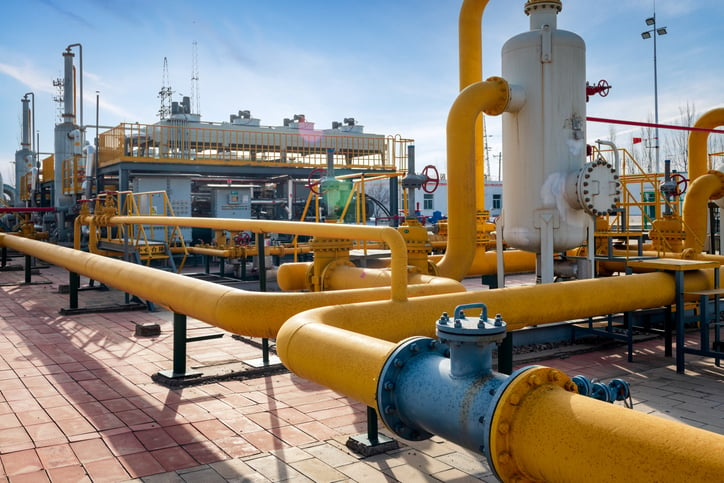
(Photo credit: Getty Images/Bjdlzx)