How to See Risk Before It Breaks the Supply Chain

Supply chain organizations around the world are discovering, if they haven’t before now, that they can’t ignore risk. Of any kind.
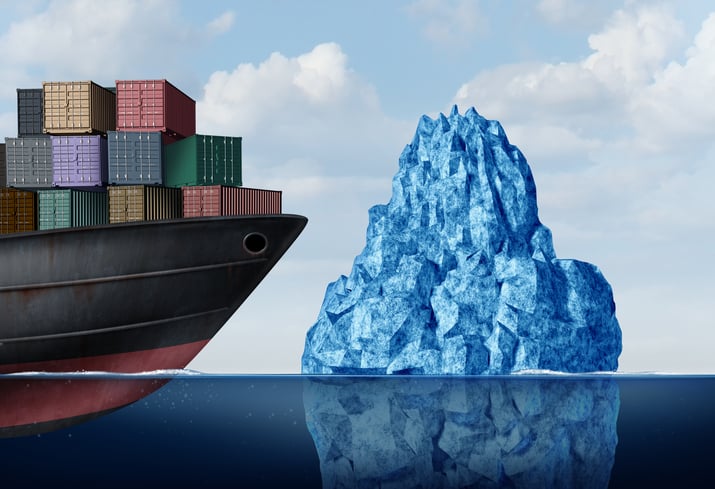
But what about the risks you don’t know about?
A Resilinc webinar on July 29 addressed that issue. “You Can’t Manage the Risks You Can’t See” discussed the questions organizations should be asking and the actions they should be taking to improve their visibility into supply chain risk — and supply chain visibility in general.
Adam Bartlett, director of expert services — life sciences at Resilinc, a solutions provider based in Milpitas, California, said that organizations need to ask: What materials go into our products? Which suppliers or products are affected by a new tariff? How much revenue is at risk? If something goes wrong, what are our options?
“While these may seem like different challenges, they all have one thing in common: understanding your supply chain well enough to make confident decisions,” he said.
Adding Up the Headwinds
Why has supply chain resilience become such a strategic priority? Bartlett supplied some figures driving the focus:
- US$260 billion — the estimated economic impact of natural disasters globally in 2025, according to numerous sources. (Although that is a $397 billion drop from that of 2024, it signals the amount of damage natural disasters can cause). “Extreme weather is creating significant business interruption across manufacturing, transportation and logistics networks,” Bartlett said.
- The value of global imports affected by the new tariffs increased fourfold in the latest trade monitoring period. Geopolitical tensions are increasingly being expressed through trade policy, creating new sourcing challenges and forcing companies to adapt quickly, he said.
- 40 percent. “During overlapping disruptions, monthly vessel transits through both the Suez and Panama canals drop more than 40 percent from peak levels,” Bartlett said. “These choke points have demonstrated how a single disruption can ripple across global supply chains, extending transit times, increasing costs and reducing available shipping capacities.”
- 3 percent. That’s the amount of global trade that flows through interconnected global value chains. “Despite reshoring and regionalizing efforts, companies remain deeply dependent on complex multi-tier supply chain networks,” Bartlett said.
Considered together, the figures indicate that disruptions are becoming more frequent, more interconnected and more difficult to predict, making multitier visibility imperative, he said: “It’s what enables organizations to understand the hidden dependencies, upstream risks and downstream business impact to determine how resilient their supply chain truly is.”
The Intertwined Supply Chain
“Our data tells us that uncertainty is basically the only certainty now,” said Gopkiran Rao, Resilinc’s chief marketing officer. The uncertainty keeps increasing, with research showing that 42 categories tracked by the company experienced greater than 500 percent increases.
While natural disasters account for a “big chunk” of uncertainty, it has now extended to be specific to the company or industry.
“It could be around foreign ownership and control,” Rao said. “It could be around export or import controls. (W)e are in an unprecedented era where the number of things that could impact our business is growing day by day. And some of these are in categories that we couldn’t even anticipate.”
Some, like forced labor risk and cybersecurity, have not been historically addressed by the supply chain organization.
“What we’re seeing now is everything is co-mingled … (and) intertwined,” Rao said.
Visibility into your entire supply chain is key to managing it all. For example, who makes the things that go into your products? What is the impact from an organizational, landed cost or a revenue risk perspective?
A Look at Med Tech
Ranna Rose, global supply chain risk leader at medical technology solutions provider Olympus, offered a look at visibility and risk in med tech.
“In med tech, the supply chain supports products that physicians rely on to diagnose and treat patients,” she said. “This is life-saving equipment that we’re using. And that means that continuity cannot be separated from quality and regulatory responsibility. If a component or supplier is at risk, we cannot switch easily or quickly.”
Ensuring your supply chain is resilient before risk or disruption happens is imperative, she said.
Med tech supports products over long life cycles, Rose said. Due to regulations, products aren’t being replaced quickly with new versions. So, obsolescence and long-term supplier visibility matter greatly, she said: “Earlier visibility gives our teams time to work through those steps carefully and protect continuity for customers and patients.”
The interconnectedness nature of risk and the speed at which it happens has made the situation more challenging, Rose said. Several suppliers — not just Tier-1 suppliers but those in lower tiers — might rely on the same sub-tier supplier source, making risk a greater issue.
“At the same time, a geopolitical issue can become a logistics issue, a material issue and then a compliance issue,” she said. “So that one issue can now go into multiple regions, as we’ve learned through the Iran war, with the closure of the routes. Better visibility helps us see those connections earlier and ask more focused questions. It does not eliminate risks. It gives the business more time better context and more options.”
Creating Greater Visibility
Learning about and understanding those connections — and hidden connections —helps create better visibility. Learning about your suppliers and their suppliers, and understanding how they are impacted by natural disasters, geopolitics, tariffs and other factors can help you identify potential risks.
Modeling and running what-if scenarios can help organizations prepare for potential risks and see where they need to improve their playbooks so they can act in real time, not react after the fact, Rao said.
Additionally, focusing on building relationships with critical suppliers will help ensure material flow, Rao said: “It’s a way of taking the risks and making them advantageous to some extent, because you're now investing in sort of a foundational understanding of your entire network end to end.”
(Image credit: Getty Images/Wildpixel)