Beyond Oil: How the Iran Conflict Reshapes Risk

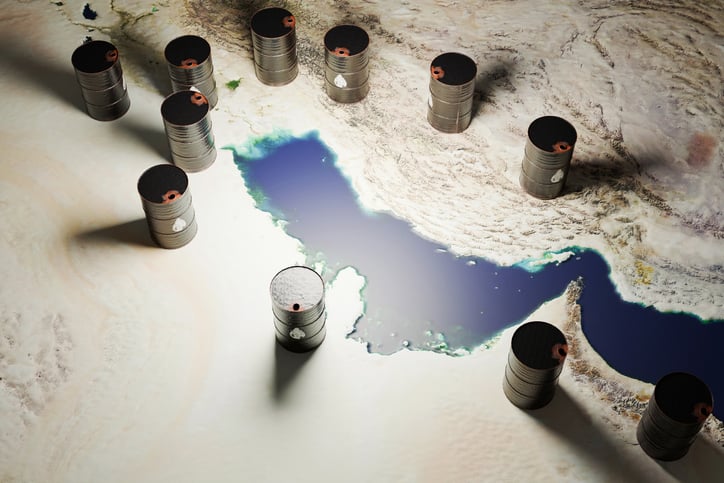
With the conflict between the U.S. and Iran in its sixth month, a sharp decline in oil prices on Monday offered relief to global markets but does not necessarily mean the end of supply chain concerns for companies and their procurement organizations.
President Donald Trump announced that additional U.S. military action against Iran had been paused, presumably paving the way for diplomatic talks (or not). Iranian officials said discussions were underway with Oman about at least temporarily reopening the Strait of Hormuz, the waterway through which roughly one-fifth of the world’s oil supply typically passes.
The pair of proclamations could be the path to the end of a conflict in which energy infrastructure has been wounded, or it could be another false start between two sides whose rhetoric has rarely matched reality. Even in a best-case scenario, while markets might react quickly to diplomatic developments, supply chains typically recover more gradually.
“The situation remains somewhat fragile and uncertain,” Mike Wirth, chair and CEO of Chevron, said during a TV interview on Sunday morning, citing declining strategic and commercial inventories as well as continuing drama around such key shipping routes as the Strait of Hormuz and Red Sea.
He added, “I think the unfortunate thing is that energy assets have been targeted in this conflict, and what that means is it degrades the capacity of the energy system to meet global demand, and how quickly that comes back will be one of the things that determines when markets actually get back to some sort of a new equilibrium.”
Since U.S. and Israeli forces launched strikes on Iran on February 28, this simple reality has been reinforced: Nearly every product — from field or factory to shelf or doorstep — embarks on a journey that is dependent on fuel. However, vulnerabilities that extend well beyond crude oil have been exposed.
For example, refineries produce not only gasoline, diesel and jet fuel, but also feedstocks used to manufacture plastics, synthetic fibers, packaging materials, chemicals, lubricants and other industrial products. Constraints can ripple through manufacturing supply chains long after oil production begins to recover.
California: Refining Capacity Takes a Hit
For manufacturers and procurement professionals, refining capacity can be just as important as crude production.
California’s fuel supply chain illustrates the challenge, says C.J. Nord, C.P.M., CSCP, founder of Supply Chains for Good, a Los Angeles area-based initiative that leverages supply chain methodologies to tackle pressing societal issues.
The recent closures of the Valero and Phillips 66 facilities in Southern California eliminated about 3.85 billion gallons of annual refining capacity while the war reduced available global crude supplies. Replacing that capacity, Nord says, is not as simple as purchasing additional fuel.
“It requires sufficient global crude supplies, marine transportation and downstream fuel distribution infrastructure,” she says. “The impact also extends beyond transportation fuels, as refineries produce petroleum-derived raw materials used throughout manufacturing.”
Manufacturers that rely on petroleum-based materials could face continued price volatility as suppliers adjust production schedules and replenish inventories. Fuel, plastics and resins have been listed as up in price for months, according to the ISM® Manufacturing PMI® Report for July.
Transportation providers might keep passing along higher fuel costs through surcharge programs. Widespread shortages might be avoided, but procurement organizations could confront continuing disruptions, product constraints and pricing volatility as energy markets search for the new equilibrium, as Wirth put it.
China: How Low Can Its Imports Go?
One of the conflict’s more unexpected developments has been China’s role in stabilizing global energy markets — “a key player in helping the global economy navigate this crisis,” Reid I’Anson, an economist at global commodities and shipping consultant Kpler, told Axios.
The world’s largest crude oil importer, China dramatically reduced purchases — by 40 percent year-over year through June, according to analysts — on international markets after hostilities began. Instead, China relied on domestic reserves of oil, natural gas and coal while increasing renewable energy generation. Its rapidly growing electric vehicle fleet also helped offset reduced gasoline consumption.
The result benefited far more than China’s domestic economy. “I guess the surprise has been just how low Chinese demand can go,” Michal Meidan, head of China energy research at the Oxford Institute for Energy Studies, told Axios. “But it’s been low without impairing the well-functioning of the economy.”
China served, as Goldman Sachs analysts wrote in a recent report, as a “shock absorber for global energy prices,” reducing its demand enough to help moderate the increases many analysts initially expected following the Strait of Hormuz closure and other disruptions. (The U.S. and other nations helped by boosting exports or releasing oil from their strategic reserves.)
Companies: Time to ‘Risk-Proof’
The Iran war has reinforced broader lessons many supply management organizations have been discussing since the coronavirus pandemic.
Supplier resilience extends beyond direct suppliers to include transportation networks, energy infrastructure and critical industrial inputs. Procurement leaders should (1) understand where petroleum-based materials exist within their supply chains, (2) have contingency plans with suppliers and (3) review transportation contracts for potential fuel-related surcharges.
Nord says that recent disruptions demonstrate the need for greater coordination among government, industries and academia to identify emerging supply chain risks before they become national crises. She believes that a supply chain central organization, similar to the U.S. Federal Reserve, would improve visibility into critical supply networks.
Whether such a proposal gains traction remains to be seen. However — as energy markets remain vulnerable, inventories tight and critical infrastructure slow to recover — the broader message for procurement organizations is clear.
“I’ll always say it: Risk-proof as much as you can,” Susan Spence, MBA, Chair of the Institute for Supply Management® Manufacturing Business Survey Committee, said during ISM’s LinkedIn Live broadcast on Monday.
“Technically, you can’t (completely) risk-proof, but go through the scenarios even if you’re breathing a sigh of relief. At least ask: What can go wrong? Are we as strong as we can be? Are we nimble and flexible so that if we had to make a change in our sourcing efforts, we could?”
(Image credit: Getty Images/Alones Creative)