ISM® PMI® Reports Roundup: June Manufacturing

After the release of the May ISM® Manufacturing PMI® Report, Susan Spence, MBA, said that the data was positive enough that a resolution to the conflict in Iran could result in “sustained expansion” for the sector.
A month later, the world is here — at least with an interim accord, tenuous ceasefire and negotiations on a permanent agreement. As U.S. manufacturers hope for a longer-term positive impact, they can be pleased with the June PMI® data, released on Wednesday, indicating a sixth consecutive month of expansion.
The Manufacturing PMI® of 53.3 percent was down slightly from the previous month, and there were mixed results on demand. But prices growth slowed significantly, employment edged oh-so-close to expansion, and sentiment among panelists’ comments was more optimistic.
June ISM Manufacturing PMI down to 53.3 vs. 53.9 est. & 54.0 prior … new orders down to 56.0 vs. 56.8 prior; prices paid down to 73.0 vs. 82.1 prior … employment up to 49.7 vs. 48.6 prior pic.twitter.com/bXU8odwMmY
— Liz Ann Sonders (@LizAnnSonders) July 1, 2026
“I’m pretty happy with this report,” Spence, the Chair of the Institute for Supply Management® (ISM®) Manufacturing Business Survey Committee, told a conference call of reporters. “There is still prices volatility — even thought it’s down greatly, a correction is still needed. Along with concerns and uncertainty, we will likely hear news on future tariffs.
“Despite all that, the panelists are hopeful, and if the end of the war is true and lasting, that will be a stimulant to keep the expansion going.”
The most eye-catching result under the hood was the Prices Index, which fell 9.1 percentage points (the largest such drop since July 2022) to 73 percent in June. Twenty-seven commodities were listed as up in price, compared to 43 the previous month.
Much of the data was collected before the ceasefire in Iran, so that impact on prices was limited, though crude oil and fuel were listed in the report as down in price. While oil prices continue a positive trajectory, Spence noted that it’s too soon to declare lasting relief — after all, the Prices Index began with an 11.5-percentage point jump in February, before hostilities in Iran commenced on that last day of that month.
“It’s good news for everyone that has been taking a big bite of the inflationary pressure on oil,” she said. “We’ll see if the ceasefire holds and where (prices) settle back down.”
In May, questions arose on whether the Employment Index — which has been mired on contraction territory for 41 of the last 42 months — could follow the New Orders and Production indexes into expansion. It got close in June, registering 49.7 percent, on the same day the ADP private payrolls report came in positive but below expectations.
More important, panelists’ sentiment is nearly reversed form the start of the year, with 64 percent indicating their companies are hiring. In January, two-thirds of companies were “managing” head counts through layoffs, attrition or not filling open positions.
US ISM’S SPENCE TO REPORTERS: RECENT DROP IN CRUDE OIL PRICES TO PRE-IRAN WAR LEVELS GOOD NEWS OVERALL;WILL SEE IF US-IRAN CEASEFIRE HOLDS, WHERE OIL PRICES SETTLE #ISM #manufacturing
— Mace News (@MaceNewsMacro) July 1, 2026
Although overall sentiment remained cloudy (34 percent positive, 66 percent negative), comments on demand were also encouraging, with a 2.7-to-1 ratio favoring positive. That tempered mixed results in the data, with the New Orders (56 percent) and Backlog of Orders (50.5 percent) showing slower growth in June and the New Export Orders Index going into contraction, at 48.5 percent.
However, the demand appears to be legit and not a product of buying to get ahead of tariffs or potential disruptions. Spence said such comments from panelists were very limited: “We get hundreds and hundreds of comments, and I saw more of that in the early days of tariffs,” she said. “If I had seen double or triple that many, I’d probably start tracking that as a sentiment, but right now, (panic buying) is not an impact.”
The June PMI® data is a continuation of the sentiment expressed in the ISM® Supply Chain Planning Forecast released two weeks ago. Business Survey panelists are confident in production and revenue growth and prices more under control, but the Iran war fallout and the Trump administration’s response after replacement tariffs expire this month are wild cards.
“If there are no (shocks), the manufacturing sector is pretty well positioned for the rest of the year,” Spence said.
The ISM® PMI® Reports roundup:
Barron’s: U.S. Manufacturing Activity Grows for Sixth Straight Month. “The U.S. manufacturing economy has grown for six consecutive months. … Growth isn’t turning into more manufacturing jobs yet. Hopefully, the impacts of war will fade now that fighting has settled down and oil prices have retreated.”
Bloomberg: U.S. Manufacturing Expands for a Sixth Month, Costs Gauge Drops. “Order backlogs grew at the slowest pace this year, and a measure of supplier deliveries continued to point to longer lead times. Supply chain disruptions, alongside concerns of further price hikes, likely encouraged some factories to shore up raw materials stockpiles. ISM’s inventory gauge rose to the highest level in over a year.”
FreightWaves: June Manufacturing Data Supportive of LTL Demand. “Tightness across the transportation space could be seen in (the Supplier Deliveries Index). A 57.4 percent reading (3.2 percentage points lower than May) signaled slower deliveries and potential supply chain constraints for a seventh straight month.”
Comments section of ISM Manufacturing PMI for June has many mentions of the war, as well as some strong feelings on tariffs pic.twitter.com/vN4nie1s0s
— Kevin Gordon (@KevRGordon) July 1, 2026
Manufacturing Dive: U.S. Manufacturing Expands Again in June, but at Slower Rate Than in May. “Two of four demand indicators — New Orders and Backlog of Orders — expanded in June, and the Customers’ Inventories Index remained in ‘too low’ territory, contracting at a faster rate. A ‘too low’ status for the Customers’ Inventories Index is usually considered positive for future production.”
MarketWatch: U.S. Manufacturers Keep on Trucking Despite a Road Littered With Obstacles. “American manufacturers are benefiting big-time from the boom in artificial intelligence. Now the apparent end of the war with Iran and tumbling oil prices should add to the momentum. The biggest drag on manufacturers is still the high cost of the Trump tariffs.”
Reuters: U.S. Manufacturing Activity Eases in June; Prices Paid by Factories Remain Elevated. “Despite June’s pullback in activity, manufacturing has grown for six consecutive months, also supported by an artificial intelligence investment boom, which has helped to blunt the hit on factories from the U.S.-Israel war with Iran. Factory inventories, however, rebounded after a prolonged period of contraction. Supply chains improved somewhat, likely because of a fragile ceasefire in the conflict.”
The Wall Street Journal: U.S. Factory Activity Continued to Expand in June. “The New Orders and Production indexes expanded, although at a slower pace than the last reading. The Prices Index remained in expansion, but fell 9.1 percentage points from May’s reading. Meanwhile, the Supplier Deliveries Index indicated slowing performance for the seventh month in a row after one month in ‘faster’ territory. Employment improved but still remained in contraction.”
The ISM® Services PMI® Report will be unveiled on Monday. For the most up-to-date content on the ISM® PMI® Reports, use #ISMPMI on X, formerly known as Twitter.
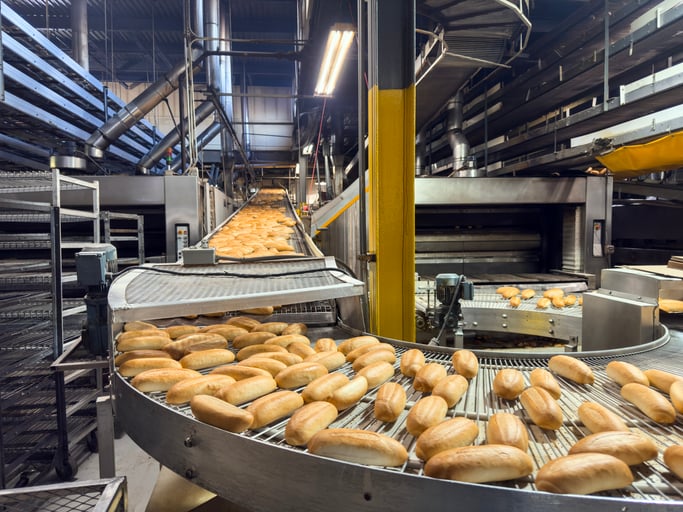
(Photo credit: Getty Images/Gerenme)