

Supply Chain News Roundup: A Spotlight on Industrial and Logistics Markets

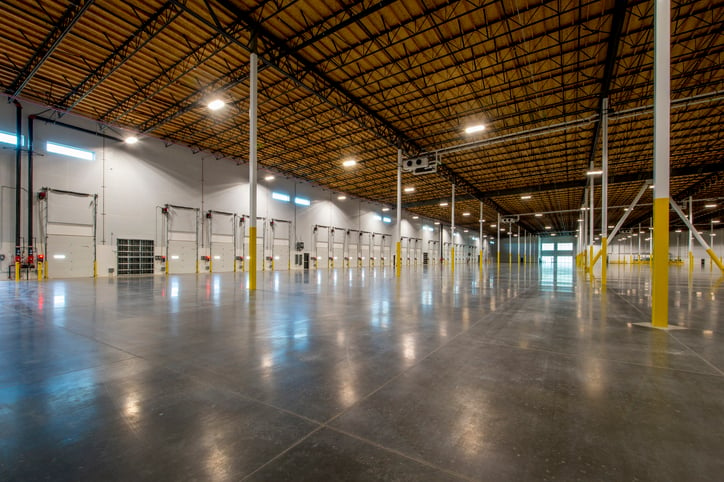
The nation’s 25 largest industrial and logistics markets — Greater Los Angeles ranks No. 1, followed by Chicago — account for 76 percent of the country’s industrial base.
Professional services and investment management company Colliers International, which tracks 78 markets, found the Midwest accounts for nine of the top markets, with eight in the South, six in the West and two in the Northeast. The other 53 tracked markets represent only 24 percent of the U.S. industrial base.
“Industrial inventory growth has slowed dramatically from the post-pandemic construction boom, with new supply down 24 percent year-over-year and construction activity sitting 60 percent below its 2022 peak,” a recent report by Colliers states. The Markets That Move America notes that the industrial market, which had been in oversupply, is beginning to balance out.
Another trend: Demand is increasing. Across the top 25 markets, net absorption increased 19 percent. Nearly 70 percent of U.S. markets recorded positive demand during the first quarter of this year.
Regarding inventory growth, “(o)n average, the top 25 markets added 7.5 million square feet of new industrial product over the past year. Ten markets exceeded that average, led by Dallas-Fort Worth, with 22.9 million square feet, and Houston, with 20.1 million square feet,” the report says.
New supply over the past four quarters (266.5 million square feet) was down from that of the previous four quarters (350.6 million square feet). “The 25 largest industrial markets accounted for 69 percent of that total, adding 183.5 million square feet, down 26 percent year over year,” the report states.
Rents are always a hot topic, with a 0.5 percent decline in the past year in average U.S. warehouse/distribution asking rents to US$10.46 per square foot. This reflects an ongoing normalization after the record rent growth of 2020-23, the report states. In the 25 largest industrial markets, however, rents went up by 0.8 percent over the past year, rising to $9.72 per square foot.
According to Colliers, the top 25 markets are (in order): greater Los Angeles; Chicago; Dallas-Fort Worth; metro New York; Atlanta; Detroit; Houston; West-Central Florida; San Francisco Bay area; Philadelphia; Phoenix; South Florida; Minneapolis-St. Paul; Charlotte, North Carolina; Columbus, Ohio; Seattle/Puget Sound; Indianapolis; Kansas City; Memphis; Cincinnati; Milwaukee; Denver; Nashville; Portland and St. Louis.
Stopping Profit Leakage
Profit leakage is a structural problem, not an administrative failure, Apex Analytix maintains. And all companies and organizations want to ensure they protect their profits.
To find the costliest errors leading to profit leakage, the AI native supplier risk and recovery provider analyzed $3.25 trillion in spend and more than 400 million invoices. The 2026 Global Overpayment Report found that the most likely locations for profit leakage were in the “blind spots between disparate systems, logistics and procurement functions,” according to a press release
The top five, according to the report, are:
1) Duplicate payments account for 18 percent of lost profit. These tend to be caused by “chaotic multi-ERP environments and fragmented vendor records.”
2) Fourteen percent is cancelled contracts. Although the services have been canceled by the organization, finance keeps automatically paying for them.
3) Pricing discrepancies between negotiated contact and invoice terms add up to 13 percent of lost profit.
4) Another 13 percent is returned goods. “Warehouse teams log a return, but the financial credit memo never gets applied,” the release states.
5) Ten percent is unclaimed rebates, where there are no earned volume incentives because data is split across four internal departments.
“The findings show a disconnect between the source of the problem and the party expected to solve it: While (accounts payable) teams are left to process the transactions, most of the leading causes of overpayments originate elsewhere in the business,” the release states.
Memory Loss
The state of the semiconductor industry is another top concern of today’s leaders.
The surge in AI data center construction is resulting in a shortage of memory; this has implications for the semiconductor industry as well as beyond.
For example, according to a recent report from Kearney, only 60 percent to 70 percent of total unconstrained memory demand is being met today. Other key points from The Great Memory Reallocation include (1) by 2029, about a third of global memory supply will be allocated to high-bandwidth memory (HBM), crowding out broader market supply, (2) “meaningful relief is unlikely before 2030” and (3) consumer prices already are being impacted, especially for applications and televisions.
Perhaps one of the Kearney’s biggest findings: “Medical devices, defense systems, aerospace platforms and critical infrastructure all depend on memory but cannot outbid AI infrastructure buyers on price, raising real access and lead-time risks in constrained scenarios.”
(Photo credit: Getty Images/Alacatr)