
Semiconductors’ Role in Automotive Supply Chain Resilience

COVID-19 exposed major supply chain bottlenecks, limited availability and longer lead times across many industries. One industry that few expected to be impacted so quickly was automotive manufacturing.
At the time, semiconductor shortages dominated headlines. Disruptions in semiconductor production reduced new vehicle inventory, while car prices soared. The sentiment was that rising vehicle prices were directly tied to extremely low inventory in the market.
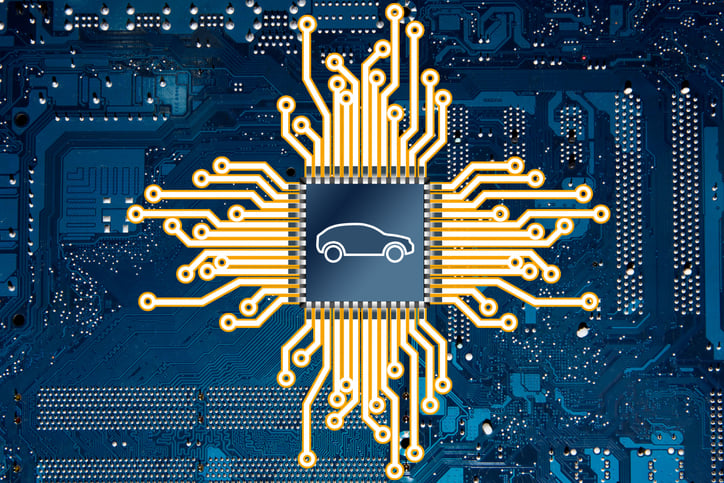
Today, the use of semiconductors in vehicles — especially electric vehicles (EVs) — is increasing rapidly. Semiconductors have become the backbone of the cars we drive: They are used in engines, safety and infotainment systems, connectivity features and advanced driver-assistance systems.
Even though EV sales have not grown as quickly as expected, the number of semiconductors required per vehicle is rising significantly as cars and trucks become more autonomous, connected and software-driven.
The Importance of Forecasting
Semiconductors are also far more present in our daily lives than many people realize. Available in many types, they support a wide range of applications beyond the automotive industry.
Semiconductors are used in industrial automation, energy, medical devices, consumer electronics, robotics, telecommunications, aerospace, data centers, gaming and many other industries. Among these, industrial automation and energy/power electronics have some of the strongest overlaps with automotive applications. These industries also play an important role in estimating future semiconductor demand.
Semiconductor production is not simple. It is a highly complex manufacturing process that requires cleanroom environments, advanced technology and extreme precision. Producing a single semiconductor can take weeks or even months.
If U.S. vehicle production rises, semiconductor manufacturing capacity must be planned and expanded months or even years in advance. Expanding semiconductor manufacturing can take several years and require billions of dollars in investment.
That is why forecasting vehicle production and building strong partnerships with suppliers is so important. Semiconductor producers rely heavily on forecasts from the automotive industry to plan capacity, allocate resources and make long-term investment decisions.
U.S. and European governments are now treating semiconductor manufacturing as a strategic priority. Both regions are investing heavily to increase domestic chip production through such initiatives as the U.S. CHIPS and Science Act of 2022 and the European Union’s Chips Act of 2023. Their goal is to reduce dependence on Asian suppliers and strengthen regional supply chain resilience.
The Many Moving Parts of Demand
Even with these investments, estimating demand remains extremely difficult. Changes in gross domestic product, consumer sentiment, interest rates, EV adoption and broader economic conditions can all contribute to future supply chain disruptions. Forecasting models must be adjusted regularly, because the difference between a bear case and a bull case scenario can be significant.
Partnering with suppliers and continuously adjusting short- and long-term forecasts are crucial. Although AI can be a powerful tool for collecting data, identifying trends and building scenarios, it cannot do everything. Supply chain resilience still depends heavily on experienced professionals who understand market behavior, supplier constraints, production planning and risk management.
For this reason, it’s essential to invest in education for the next generation of supply chain professionals. The future of automotive manufacturing will depend not only on technology, but also on the people who can forecast, plan and manage increasingly complex global supply chains.
Estimating semiconductor demand is just one example of how companies can anticipate and avoid potential supply chain disruptions. Strong supplier partnerships, short- and long-term demand modeling, and scenario planning are essential to improve forecast accuracy.
While AI can help mine and organize large amounts of data, the need for experienced professionals who can interpret data, assess risk, and use those insights to drive long-term strategic decisions remains critical.
(Image credit: Getty Images/Jae Young Ju)