From Opportunity Identification to Opportunity Realization: How AI Closes the Procurement Savings Gap
Sponsored Content
Monetization from procurement analytics requires execution beyond basic spend visibility. Markets move faster than procurement cycles: commodity prices shift, freight rates fluctuate, suppliers adjust margins, and labor costs tighten while analysts are still validating reports. By the time opportunities reach buyers, the economics may already have changed, creating a costly identification-to-realization gap.
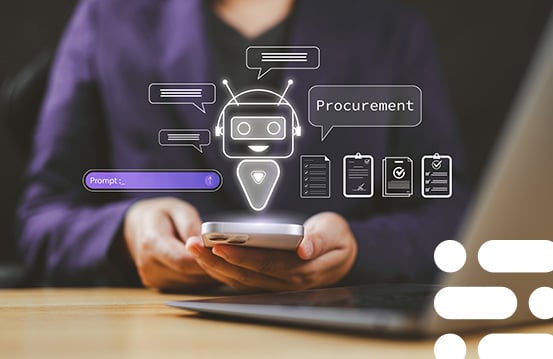
Agentic AI changes this operating model by turning periodic analysis into a continuous capability. Live commodity, freight, labor, and supplier data flow directly into dynamic cost models, keeping insights current and actionable. AI can rapidly process supplier PDFs, spreadsheets, contracts, and emails, converting them into negotiation-ready intelligence within minutes instead of weeks. Embedded directly into procurement workflows, these insights help buyers act faster without replacing human judgment. The result is a more responsive procurement function that captures savings before market conditions shift again.
II. Four Pillars of AI-Powered Cost Optimization
AI-powered cost optimization relies on four connected capabilities.
- First, continuous spend intelligence helps procurement teams monitor supplier spend, price drift, maverick buying, and savings opportunities in real time.
- Second, dynamic should-cost models refresh cost structures using live market, supplier, and operational data to strengthen negotiations.
- Third, AI-driven quote parsing and benchmarking transform supplier PDFs, spreadsheets, and emails into normalized comparisons with clear leverage points.
- Finally, embedded execution integrates insights directly into procurement workflows, links opportunities to sourcing actions, and tracks realized savings.
Together, these capabilities create a continuous operating model that closes the identification-to-realization gap.AI-powered cost optimization runs on four connected capabilities.
III. The 4 pillars in practice
- F500 American Home Appliance Manufacturer
Having invested heavily in procurement analytics and should-cost software, the problem was trust. Supplier quotes no longer matched outdated model libraries, and buyers spent weeks manually comparing PDFs, drawings, spreadsheets, and cost breakdowns across steel, plastic, and electrical components.
Sourcing events slowed down. NPI timelines slipped. Negotiations became reactive.
The company launched a focused AI proof-of-concept to change the speed of the process.
Using Evalueserve’s Hybrid-X platform built on Gemini Enterprise Agent Engine, the system parsed supplier PDFs, engineering drawings, spreadsheets, and unstructured responses into standardized datasets within minutes. AI agents identified missing information, flagged inconsistencies against should-cost models, and highlighted negotiation levers buyers could use with suppliers.
The first PoC processed 15 supplier responses across steel and plastic parts. Moving weeklong processes to real time. End-to-end turnaround improved by 50–80%.
Category managers who had negotiated on instinct for years began trusting the cost models again because they could transparently compare the quotes against individual vetted line items. The company is now scaling the solution into production across SAP, the cost modeling application, and Google Cloud.
2. F500 Semiconductor Capital Equipment Manufacturer
They wanted better control over the cost of highly specialized servicing operations spread across global supply chains. The company managed thousands of service combinations, proprietary manuals, reagents, and maintenance processes tied to extending the life of fabrication equipment.
The challenge was scale.
Critical cost intelligence sat buried inside hundreds of technical manuals. Building traditional cost models manually would have taken years and required intense human effort.
The company turned to Agentic AI.
The team built a cost-intelligence prototype that parsed complex service manuals, extracted parts, activities, service steps, identified cost drivers, and converted them into structured datasets ready for should-cost modeling.
AI handled the heavy extraction work. Business rules standardized outputs across regions, suppliers, and service variations. Every extracted element remained traceable back to the source document, giving analysts confidence in the outputs and visibility into where validation was needed.
The result was a scalable system that transformed technical documentation into negotiation-ready cost intelligence in far less time.
The next phase embeds should-cost intelligence into sourcing workflows, enabling faster scenario analysis and giving procurement teams a data-driven way to evaluate supply-chain shifts in the semiconductor market.
IV. A Roadmap for CPOs: Building the Capability
This transformation starts with one category, one sourcing event, and one team prepared to work differently.
First, strengthen the data foundation by cleaning supplier records, aligning spend taxonomies, and standardizing classification rules. Without reliable data, procurement teams rely on instinct instead of evidence.
Next, create continuous visibility. AI can monitor spend, flag anomalies, track price drift, and identify savings opportunities as markets shift, not months later.
Then introduce intelligence into negotiations. Dynamic should-cost models combine supplier, market, and purchasing data to give buyers stronger leverage before discussions begin.
Finally, embed insights directly into procurement workflows. Negotiation fact packs, supplier benchmarks, and savings trackers should appear inside the tools buyers already use, not in forgotten dashboards. There is no need to wait for perfect systems. Start small with one high-spend category and a single sourcing event, prove measurable ROI, and scale confidently across the organization while improving results with every sourcing cycle.