

The Hot Commodities and Hotspots of Cargo Theft

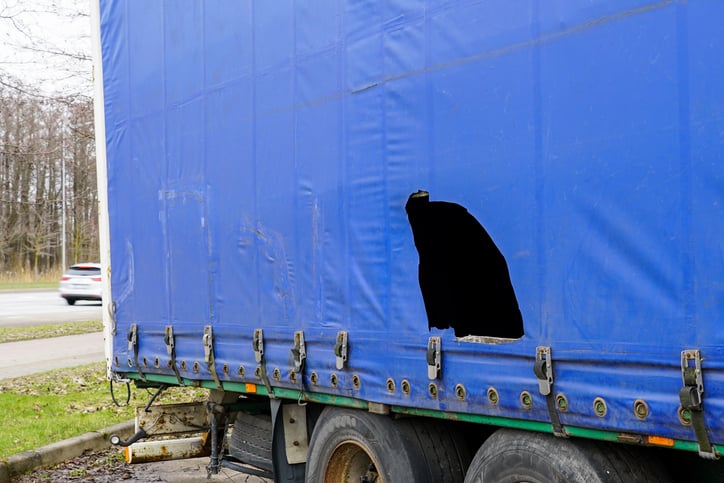
Cargo thefts are rising, but the numbers themselves don’t tell the whole story.
CargoNet “recorded 3,594 supply chain crime events across the U.S. and Canada in 2025, essentially unchanged from the 3,607 events reported in 2024,” the Jersey City, New Jersey-based cargo theft prevention and recovery network reported on its website. “However, incidents involving confirmed cargo theft rose sharply, increasing 18 percent year-over-year from 2,243 to 2,646.”
To reduce theft risk, cargo carriers need to understand the trends in commodities being stolen and how geography plays a role.
Targeted Commodities
Cargo theft numbers aren’t the only change: The commodities stolen also are shifting, Scott Cornell, vice president, transportation risk and strategy at LogistIQ, said last week during FreightWaves’ Freight Fraud Symposium 2026.
High-level food and beverages remain the most targeted category, followed by household goods and electronics, he said during the “Cargo Theft Trends and Methods” session. “But when you dig down into these categories, you get down to singular commodities,” he said.
Tires were the most stolen automotive commodity in 2024, said Steven Lang, manager of marketing and member services at CargoNet. They remained the most targeted commodity in 2025, but there was a large uptick in theft of copper, he said.
Copper took over the No. 1 spot during the first quarter of this year, followed by tires. Other targeted goods, Lang said, include energy drinks, meat and seafood.
A deeper dive into the thefts reveals geographical dynamics. Shipments that originate in California have a much greater chance of being targeted than shipments sent to California, Lang said. The same is true with Texas.
More than 60 percent of all copper theft incidents occur in Texas, Alabama, Illinois, California and Arizona, he noted. Nearly a third (30 percent) of those thefts were destined for New York and Pennsylvania, he added.
In the Northeast, where typically targeted commodities are meats, seafoods, alcoholic beverages and cosmetics, there are three or four organized cargo theft rings, Cornell said.
“They’re stealing the freight coming out of New Jersey and Pennsylvania, and some out of New York,” he said. New Jersey is a hot spot for cargo theft due to its proximity to New York.
The Trends of Theft
The most significant changes in cargo theft have occurred in the past five or six years, Cornell said. “There is more stolen cargo leaving the country than ever before,” he said.
Ten to 15 years ago, cell phones were commonly stolen and moved to South and Central America for parts, or for use if security codes could be broken.
Today, he said, stolen cell phones are torn apart and used to build other things, like drones and other technology, he said.
Another change: Cargo theft rings have become more sophisticated. They’re now taking orders, Cornell said: “These are not random thefts anymore. They are being told what their customers need and they are targeting what their customers need.”
Targeting often follows economic trends. “For example, the price of coffee has gone up,” Lang said, “and we’ve seen higher targeted coffee thefts. So, if you just look at the landscape of the economy and see what’s been popular or where prices are rising, there’s a good chance that these types of things are going to be targeted because it’s going to be easier for (thieves) to flip.”
And with AI a big trend, AI-related equipment is a hot commodity. “You can’t read an article or go anywhere now without talking about AI and data centers,” Lang said. “It takes a lot of components and a lot of equipment in order to run them, and they are being stolen.”
Reducing Theft, Reducing Risk
To reduce the likelihood of cargo theft, it’s critical that carriers determine where their risk is on all levels, Lang said.
Among the questions to ask are: What’s being targeted? Where is it being targeted? Where do you operate? How are you operating? Are the commodities you transport trendy or rising in price? Are our shipments easy to steal and/or move? Are we doing enough to prevent theft?
Even if companies take precautions and understanding the risks, the cargo theft issue is likely to remain.
“Cargo thieves never go away,” Cornell said. “They just adapt.”
(Photo credit: Getty Images/Zigmunds Dizgalvis)