
Supply Chain News Roundup: Another Week of Volatility and Disruption

The topsy-turvyness surrounding tariffs, gas prices, the Strait of Hormuz and the Iran war continue, and supply chain organizations, once again, are left with uncertainty and volatility — and the need for resilience and adaptability.
Among the past week’s developments:
10-percent tariffs. The U.S. Court of International Trade on Friday ruled that the 10-percent across-the-board tariffs, implemented under Section 122 of the Trade Act of 1974 by the Trump administration in February, were illegal. The timing — the tariffs were set to expire in July unless Congress continued them — is uncertain. The U.S. Justice Department has appealed the decision — and has asked for a delay in suspending those tariffs.
European Union (EU) tariffs. President Donald Trump has given the EU a July 4 deadline to ratify its trade agreement with the U.S. If not ratified, he has threatened “much higher” tariffs. On Truth Social, he commented: “I’ve been waiting patiently for the EU to fulfill their side of the Historic Trade Deal we agreed in Turnberry, Scotland, the largest Trade Deal, ever! A promise was made that the EU would deliver their side of the Deal and, as per Agreement, cut their Tariffs to ZERO! I agreed to give her until our Country’s 250th Birthday or, unfortunately, their Tariffs would immediately jump to much higher levels.”
ABC News noted that “It was unclear from the post whether Trump was implying that the tariff rates would jump on all EU goods or the increase would only apply to autos.” The administration last week had threatened 25-percent tariffs on European autos.
Iran war and Strait of Hormuz. The back-and-forth in discussion between the U.S. and Iran continues — and the Iran war ceasefire is questionable as no deal to end the war is forthcoming. Trump has said that the cease-fire is on “massive life support.”
The Strait of Hormuz continues to be blocked, and Reuters reported that “Iran has expanded its definition of the Strait of Hormuz into a ‘vast operational area’ far wider than before the Iran war, according to a senior officer in the Islamic Revolutionary Guard Corps (IRGC) Navy.”
Amin Nasser, president and CEO of Aramco, said that if disruption continues, the oil recovery will likely extend into 2027. Before the war, 20 percent of the world’s oil passed through the Strait of Hormuz. Now, Nasser said, more than 600 ships, many of which are oil tankers, are stuck in the Persian gulf.
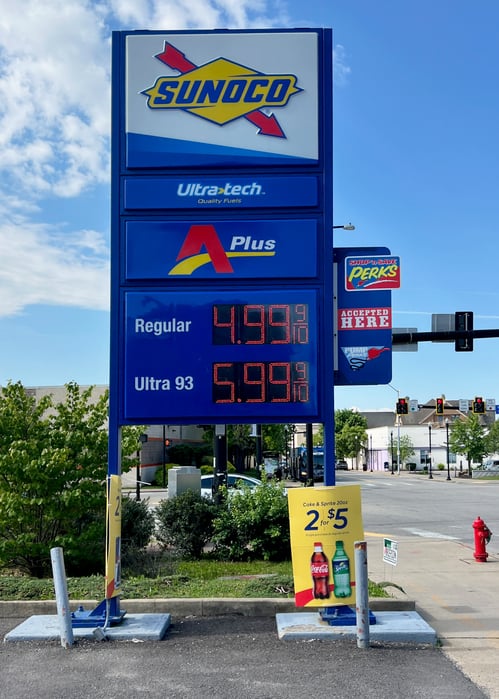
Gas prices. The situation has caused gas prices to continue to rise, and Trump on Monday said he would like to temporarily suspend the federal gas tax (which is slightly over 18 cents a gallon). Such a move would require an act of Congress. “Asked by reporters in the Oval Office later in the day how long the gas tax would be suspended, the president responded, ‘Till it's appropriate.’” The national average for a gallon of gas today is US$4.50, according to AAA.
Other tariffs. The administration Monday night said it is delaying its plan to reduce tariffs on imported beef until details can be worked out. This came after an “outcry” from some congressional Republicans and cattle ranchers.
In an American Farm Bureau Federation article, economist David Munch reported that beef imports have been hitting high levels. “During the first quarter of 2026, the U.S. imported 562,000 metric tons of beef and beef products valued at nearly $4.5 billion, up 18 percent from the same period last year and 122 percent higher than five years ago,” he wrote. At issue is that persistent drought and low snow levels are making it hard for cattle ranchers to rebuild their herds.
(Photo credit: Getty Images/BGWalker)