ISM® PMI® Reports Roundup: April Manufacturing

Depending on one’s perspective of the data, the ISM® Manufacturing PMI® Report for April can reflect stability or a stalemate for U.S. factories.
The Manufacturing PMI® of 52.7 percent matched the March reading and indicated a fourth straight month of expansion, fueling descriptions of a “resilient” sector in coverage after the report’s release on Friday. However, continuing employment sluggishness and no down button in sight for the Prices Index elevator are among the worrisome data.
The conflict in Iran and tariffs have dominated discussion, and with the former entering its third month, the latter dynamic added another layer. As Susan Spence, MBA, Chair of the Institute for Supply Management® (ISM®) Manufacturing Business Survey Committee, did interviews on Friday morning, President Donald Trump announced an increase on tariffs on automobiles from the European Union to 25 percent.
prices paid at 84.6 while employment craters to 46.4 is the stagflation print in one line
— Kiro (@KiroIkigai) May 1, 2026
“(The sector) is steady and in an expansion trend; while new orders have gained, backlogs and the new export orders growth deteriorating for a third month in a row and the Production Index starting to slow its gains has me a bit concerned,” Spence told a conference call of reporters. “I believe the uncertainty of the Iran war and the (trends in) prices and employment should be cause for concern that PMI® gains so far this year are at risk.”
She continued, “Things are still in growth mode but slowing down a bit.”
The yellow flags that were apparent the previous month brightened in hue in April, headed by the Prices Index, which registered 84.6 percent, its highest reading in four years. The index has increased 25.6 percentage points in the last three months, with 46 commodities reported as up in price — that’s approaching coronavirus pandemic levels — and just one listed as down in price. (Take a bow, natural gas.)
Spence said the turmoil in the Middle East and the closure of the critical Strait of Hormuz are only partially to blame for the prices spike, noting the index was on its way up before U.S. and Israeli forces struck Iran on February 28. She also noted U.S. Federal Reserve chair Jerome Powell’s comments last week that tariff-related price increases are being passed on to consumers (who are mitigating the impact by continuing to buy).
“If there is a swift end to the war, I think, the issue could correct itself within a few months,” Spence said. “But the fact that the index was rising before that is a concern. Tariffs comments (from panelists) were down, so I wonder if there would be more optimism had the war not broken out, because the tariffs were meant to be a one-time increase, and then companies move on. Now, it’s not that clear.”
For a second straight month, demand signals were mixed. The New Orders Index was up 0.6 percentage point to 54.1 percent, and the Customers’ Inventories Index (39.1 percent) dipped further into the “too low” territory that is typically considered positive for future production. But Backlog of Orders Index (51.4 percent, down 3 points) growth slowed, and the New Export Orders Index (47.9 percent) contracted more strongly.
Higher oil prices and other geopolitical challenges join tariffs as a concern for factories in the latest ISM survey of manufacturing managers. https://t.co/oxTylPVNb2 pic.twitter.com/PU1tsHmdEw
— scott horsley (@HorsleyScott) May 1, 2026
Amid recent speculation that buyers are trying to get ahead of tariffs or potential Middle East-related disruptions, companies’ efforts to stock up could be getting thwarted by lengthening lead times. The Inventories Index (49 percent) increased 1.9 percentage points but remained in contraction while the Supplier Deliveries Index (60.6 percent) indicated the slowest delivery performance since May 2022 (65.7 percent).
“We'll see what happens next month, because as new orders go, within a month or two, the Production Index (53.4 percent in April, down 1.7 percentage points) follows, then backlogs,” Spence said. “I would have felt better if we had a bigger pop on new orders and if the backlogs and exports at least held steady.”
The Employment Index remained “stubborn,” as Spence put it. The reading of 46.4 percent was down 2.3 percentage points compared to March and indicated a 31st consecutive month in contraction. Though the share of panelists’ companies adding staff (17.5 percent) was higher in April, so were those reducing head counts (20.2 percent).
Among comments, Spence said, there was a 1.7-to-1 ratio on employment reductions versus hiring. “Some companies (are going beyond) not hiring,” she said. “I’m noticing more in the comments that panelists are mentioning layoffs or not backfilling and letting attrition do its thing. Those companies are managing down.”
The ISM® PMI® Reports roundup:
Barron’s: Manufacturing Growth Is on a Winning Streak — Four Months in a Row. “The U.S. manufacturing economy has grown for four consecutive months. And the growth is spreading, despite rising oil prices and pesky tariffs. Still, that’s not turning into more manufacturing jobs. Among respondents, Iran and tariffs remained topics of interest.”
Bloomberg: U.S. Manufacturing Holds Up as Costs Gauge Hits Four-Year High. “The ISM report showed new orders picked up in April as production growth decelerated. (The Supplier Deliveries Index) rose to the highest level since 2022, with the longer lead times likely a result of war-related disruptions. The (Employment Index) fell to a four-month low, indicating factory headcount continued to shrink.”
CNBC: ISM Manufacturing PMI® Comes in at 52.7%, Just Short of Estimates. “(The Employment Index) has been the weakest part of the PMI®,” analyst Rick Santelli said. “(In April), 46.4 percent, well below expectations and sequentially lower than 48.7 percent. ... Employment is an area we’d like to see a little stronger as we are in this no-hire, no-fire environment.”
Logistics Management: Manufacturing Expands for Fourth Straight Month in April as Prices Surge and Hiring Lags. “Assessing manufacturing performance through the first four months of 2026, Spence said January’s return to expansion validated panelists’ earlier expectations, with further gains in the months that followed. However, rising prices remain a wild card, raising the question of how much further increases can go before they begin to dampen momentum.”
MarketWatch: Embattled U.S. Manufacturers Show Their Mettle, Grow for the Fourth Month in a Row Despite Iran War. “The rebound in manufacturing has come as a surprise. Businesses began the year in a cautious stance as they grappled with the initial Trump tariffs and soft demand from customers. … The simmering Iran conflict and high oil prices, however, are likely to keep a lid on how fast manufacturers can expand.”
Reuters: U.S. Manufacturing Sector Steady in April, but Input Costs Surge Amid Iran War. “Economists polled by Reuters had forecast the PMI® rising to 53 percent. The PMI® was anchored by an increase in new orders, likely as businesses rushed to place orders to avoid shortages and higher prices stemming from the U.S.-Israel war with Iran. The (New Orders Index) rose to 54.1 percent from 53.5 percent in March.”
#ISM #Manufacturing #NewOrders strong and #PricesPaid surges. Hard to believe anyone is talking about rate cuts.
— Richard Bernstein Advisors (@RBAdvisors) May 1, 2026
Supply Chain Dive: Manufacturing Expands for Fourth Month, but Price Increases Remain a Concern. “Some commenters said that demand for manufactured goods continues to trend higher than last year, but it is being weighed down by the Iran war and rising energy prices. Others noted continuing risks to supply chains, market constraints for various materials, and volatility in commodity markets.”
The Wall Street Journal: U.S. Factory Activity Expands in April. “The New Orders Index expanded for the fourth straight month after four straight readings in contraction, the survey said. The Production Index remained in expansion territory but was lower than March’s reading.”
The ISM® Services PMI® Report will be unveiled on Tuesday. Also, the ISM® Supply Chain Planning Forecast for the manufacturing and services sectors will be released on May 15. For the most up-to-date content on the ISM® PMI® Reports, use #ISMPMI on X, formerly known as Twitter.
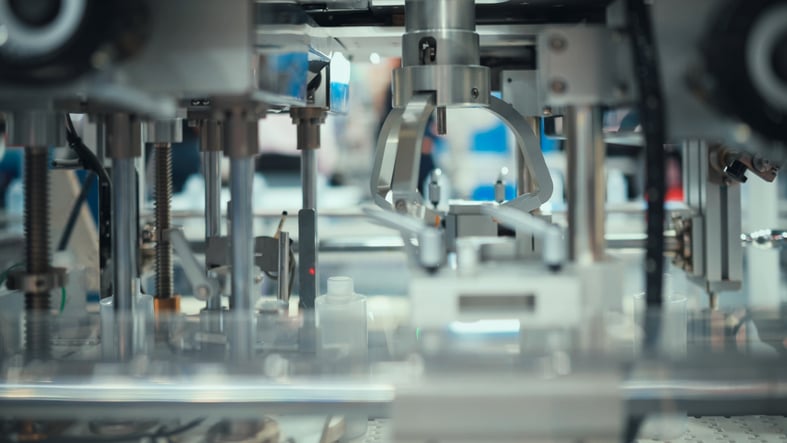
(Photo credit: Getty Images/Prime Images)