Liberation Day, a Year Later: Unpredictability Still Prevails

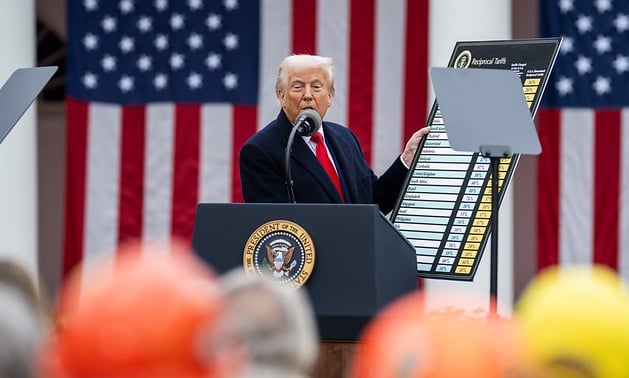
For years, the average tariff rate held steady at 2 percent. During President Donald Trump’s current term, tariffs have escalated, lowered, been reinstated and even skyrocketing to as much as 145 percent on Chinese goods.
In the year since Liberation Day — April 2, 2025 — tariffs have settled at about 10 percent, the level Trump imposed under Section 122 of the Trade Act of 1974 after the Supreme Court ruled the International Emergency Economic Powers Act (IEEPA) tariffs unconstitutional.
How have supply chain organizations been coping since then? How should they move forward?
Offering their thoughts are four supply chain and trade experts:
- Joe Adamski, managing director, consulting at ProcureAbility, procurement and supply chain advisory and services firm
- Jeff Tafel, president of the National Association of Foreign-Trade Zones
- Karen Gerwitz, board member of World Trade Centers Association and president of World Trade Center Denver
- Amy Julian, strategy and transformation partner at Armanino, a top 25 consulting and accounting firm.
Question: Where are supply chain organizations, the manufacturing sector and the tariff environment now, one year after Liberation Day?
Tafel: One year out, businesses are still looking for a greater level of predictability. While some of the wild swings we saw in the months immediately following the initial tariff announcements have eased, the current environment remains uncertain. Section 122 tariffs have defined expiration dates, but that only means businesses know additional changes are likely still ahead. The new Section 301 investigations also signal that further shifts may be coming.
When companies can’t reliably plan for the future, they often have no choice but to pause expansion plans, or even scale back, until there is more stability. That said, the U.S. foreign-trade zone program offers important tools that can help mitigate some of this volatility, and we’ve seen a dramatic increase in interest in the free trade zones (FTZ) program as a result.
Gerwitz: The tariff environment remains volatile and unpredictable, with new executive actions emerging even after prior measures were struck down. Manufacturers and supply chain leaders are operating defensively, building flexibility into sourcing and production while managing elevated, less predictable costs. U.S. manufacturers have borne more than 75 percent of the tariff burden, despite being the intended beneficiaries.
Julian: There has been some reshoring and domestic capacity investment, but not a broad-based manufacturing jobs boom. However, the industry moves slowly and decisions to reshore take time, and even more time to execute. We are seeing companies rethink the supply chain and starting to make investments, but it may take another few years to see the true impact; even then, 60 percent said full reshoring would still take one to three years.
Adamski: Realistically, (U.S. tariff income) is an estimated tax on U.S. companies and taxpayers of (an additional) US$185 billion this year, versus the $79 billion collected in 2024. This increase in costs has been mitigated somewhat through various supply chain adjustments. The biggest shift has been a move away from China. The beneficiaries of this change have been other Southeast Asian nations like Vietnam, Malaysia and Thailand, and certain Latin American countries such as Mexico, Brazil and Columbia.
A second and related shift has been nearshoring to Mexico. While the U.S.-Mexico-Canada Agreement (USMCA) is on shaky ground, there is a significant labor arbitrage opportunity in Mexico versus the U.S., and logistics are much simpler. Other companies have responded through aggressive cost cutting campaigns, finding ways to reduce or offset the tariffs through negotiations and sourcing.
Many companies, though, have continued with a wait-and-see approach. Some of their commodities, especially long lead time items, can’t be easily shifted. The flurry of activity from the administration made it difficult to plan, creating significant volatility that resulted in planning paralysis. As the trade picture becomes clearer, companies will be in a better position to adjust their supply chains long term. The reality for all, though, will be that a multi-country and multi-supplier strategy will become essential as the need to develop more resilient supply chains will trump a desire for efficiency.
What we have not seen is reshoring, which was a stated policy goal. Domestic production has declined since Liberation Day overall, and the employment figures paint the same picture — employment in manufacturing has continued to decline in the U.S. Capital investment overall is down, and while some foreign companies have promised significant investment in the U.S., which has not yet materialized.
Q: What did Liberation Day achieve? How have companies adjusted their operations, cost structures and sourcing over the past year?
Julian: We are seeing a heavier push in mid-market manufacturing around AI. Most organizations still feel like they are just starting to tap into AI benefits, and that will likely change their cost structures. Beyond that, the traditional playbook is still valuable. Shifting source of supply or renegotiating supply contracts, managing inventory tightly, and automating both the shop floor and supporting function can drive costs.
Most businesses impacted by tariffs took steps to do all of the following: renegotiate with suppliers, find opportunities to save costs, and pass price increases to consumers. The mix of those choices depended on specific industry dynamics. Thomson Reuters Institute’s 2025 Tariffs Report found 72 percent changing sourcing patterns, 52 percent renegotiating supplier contracts and 49 percent front-loading inventory.
Tafel: Over the past year, we’ve seen companies make adjustments across all of these areas, especially when it comes to sourcing strategies. Businesses have had to be flexible and responsive in the face of changing trade dynamics. However, without a more stable policy environment, many of these adjustments are not long-term strategic shifts. In many cases, they are short-term measures designed to help companies manage ongoing uncertainty rather than permanent operational changes.
Gerwitz: Liberation Day increased costs across the board. Importers, exporters, manufacturers and consumers all absorbed higher prices, while businesses, particularly smaller firms, faced real costs in restructuring supply chains. It also accelerated efforts by trading partners to reduce reliance on the U.S. market. Many companies have paused trade, stockpiled inventory, and delayed investment due to ongoing uncertainty, creating broader economic risk tied to reduced trade activity.
Q: How are supply chain organizations and manufacturers coping with ongoing tariffs?
Tafel: Tariffs and broader trade uncertainty remain an ongoing challenge. Companies are having to take a much broader view of their operations and supply chains, prioritizing resilience, redundancy, and geopolitical alignment as they navigate a much more complex global environment. While many businesses have adapted where they can, tariffs continue to create cost pressures and planning challenges. Companies are working to build more flexibility into their operations, but uncertainty remains a significant factor in decision-making.
Gerwitz: Tariffs remain a persistent risk, and firms are planning accordingly given the potential for new or reintroduced duties under different authorities. Actions such as Section 122 tariffs and new Section 301 investigations indicate continued interest in maintaining a broad tariff framework.
Adamski: (Section 122 tariffs) are applied across all trading partners, and the legislation is meant to address balance of payments issues; it’s likely there could be an additional legal challenge of the language of this statute, but it will not be resolved prior to the 150-day clock running out on these tariffs. By law, they expire unless Congress acts to extend them.
The universal nature of these tariffs makes some of the existing mitigation strategies companies can and have employed more difficult to execute. I do expect that coming actions will seek to reconstruct much of the tariff infrastructure that was in place, but under Section 301 and Section 232. That will only require time and certain investigations.
Short-term strategies include (1) identifying suppliers in lower-tariff countries and shift orders, including nearshoring, and (2) making volume purchases prior to tariff implementation. Longer-term strategies are (1) redesigning products to reduce the amount of tariffed materials utilized, (2) if the tariff environment remains volatile, sourcing from multiple vendors to balance orders to lower cost regions and (3) developing suppliers or internal capabilities in lower tariff regions to have alternative sources of supply.
Q: How have global trade flows, partnerships and cross-border investment strategies evolved across international markets?
Tafel: These continue to be both ongoing challenges and opportunities for businesses operating in today’s environment. Companies are evaluating global trade flows, partnerships, and investment strategies with greater scrutiny as they respond to evolving risks and market conditions. The specific changes vary widely depending on the company, industry, and geography, as businesses work to navigate their own unique paths forward in an unpredictable environment.
Gerwitz: Global trade is becoming more fragmented, with tariff uncertainty, new investigations, and higher baseline duties pushing economies to diversify trading relationships. The EU, Canada, Mexico and others are accelerating trade deals that increasingly exclude the U.S., prompting companies to reassess where and how they operate internationally.
In this environment, World Trade Centers Association (WTCA) plays a critical role by helping businesses identify new market entry points, establish vetted partnerships and navigate shifting trade dynamics. Its global network provides on-the-ground insights and connections that support more resilient supply chains and investment strategies.
Q: What actions and strategies should supply chain organizations employ?
Adamski: Many companies will have already taken what actions they can, but for those who are still trying, actions should include:
- Develop a cross-functional team to address this. Procurement, finance, tax and regulatory all have a perspective that will need to be captured.
- Map risk exposure. You need to know exactly what commodities you’re buying that are at risk, and where they come from.
- Scenario modeling. Map out various tariff scenarios on those items to understand your risks. Nearshoring does not automatically solve your problem, as costs may not make sense to move to new suppliers. The full end to end value chain needs to be assessed to determine how best to proceed.
- Engage with your suppliers and distributors. They may have ideas and solutions you don’t. You can also try to work with them to collaboratively share costs, but at the end of the day tariff costs are being borne by the end consumer.
- Invest in trade analytics. Knowing the difference between trade codes that look similar is crucial to limiting your risk. Understanding how to calculate exactly what the tariff should be is essential — it may not be on the full price paid, but instead only on the physical components that are subject to tariffs by weight and value. Experts in trade will help to evaluate that. Where tariff driven costs in the past have not been significant, this was often ignored but the world has shifted and companies need to find ways to manage these costs effectively.
- Develop alternative supply chain models that will lower overall supply costs.
(Photo credit: The White House/U.S. government work)