
Iran Conflict: With Volatility Here to Stay, What Can Be Done About It?

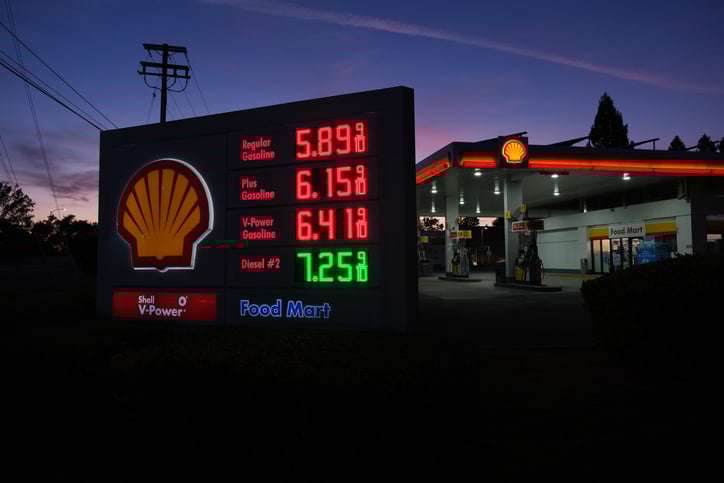
In the more than a month since the Iran conflict began, fuel prices have skyrocketed, tens of thousands of ships have been rerouted, and supply chains of all types have been disrupted.
What does the supply chain landscape look like, and how can supply managers respond?
Shipping and Shipping Routes
According to FreightWaves/American Shipper, more than 34,000 ships diverted routes during the four weeks after the start of the Iran conflict on February 28 and Iran’s subsequent closure of the Strait of Hormuz, a busy oil shipping route. Suez Canal shipping has been disrupted by Houthi attacks, among other issues.
“Since these disruptions began, there has been a dramatic escalation in shipping rates and a reshuffling of service routes,” Richie Daigle, supply chain evangelist at Tive, said in a statement. “Shippers are now facing surging prices, extended delays and the emergence of inflationary pressures in various sectors.” This is particularly impacting pharma, as 10 percent
The global container network has never fully recovered from the previous Red Sea diversion, said Stephen Dyke, principal solutions consultant manager at FourKites. “Carriers had just started moving services back through Suez, and that capacity was about to come back into the market,” he said in a statement. “Now it’s gone again, and you’ve added Hormuz on top of it. Shippers are absorbing a second shock before the first one fully healed."
Fuel Prices and Surcharges
Consumers as well as logistics/transportation companies are experiencing skyrocketing transportation costs. Gas prices averaged US$4.14 a gallon Tuesday, according to AAA. In Phoenix, prices were commonly about $5 a gallon.
Airlines are cancelling flights, as the price of jet fuel has nearly doubled. But that’s not the only issue facing airlines: Will there be enough supply as summer approaches?
Delivery companies’ carriers are feeling the pain as well. UPS, the U.S. Postal Service (USPS), FedEx and Amazon have announced fuel surcharges. Amazon is implementing a 3.5 percent fuel and logistics-related surcharge to third-party sellers’ fees. USPS has received approval for a temporary 8 percent transportation-related surcharge on parcels.
The Impact on Freight Brokers
Ricky Gonzalez, CEO of Tabi Connect, a freight technology company working with brokers on real-time pricing and market response, notes that the Strait of Hormuz closure shows that volatility has gone beyond being a market condition to being “the environment” — the state of the supply chain landscape.
The market, prices and costs are constantly changing, in response to the current environment. This makes it challenging on the operations side for freight brokers.
“What people sometimes underestimate is how immediately these macro events translate into freight constraints,” Gonzalez said in a statement.
“Fuel used to be something you could update on a schedule and trust it would hold for a few days,” he said. “But fuel is really just one piece of a bigger pattern. Every major macroeconomic event, a conflict, a tariff announcement, a sanctions shift, creates an immediate ripple in how freight moves and what it costs. Brokers quoting manually are discovering the hard way that they’re winning freight on bids that have already moved against them by the time the load ships.”
Managing the Situation
Shippers should prioritize a comprehensive evaluation of their routes, especially for high-value and sensitive cargo, Dyke said, adding that the key is adaptability — being prepared to modify routes and partners as needed.
Invest in real-time shipment tracking technology is just as important, Daigle said. Such technology not only tracks the location and condition of shipments but also maintains operational efficiency given the current environment of changing delivery times and transportation networks.
“It’s essential to understand that the current situation isn’t just a temporary disruption; it may well redefine global shipping practices,” Daigle noted.
Businesses must be ready to embrace new strategies and technologies to navigate these changes effectively, he said. “Real-time data and a flexible approach to logistics are more than just tools; they’re necessities in ensuring resilience in the face of ongoing global supply chain challenges.”
Gonzalez noted that his company’s customers say that the most valuable strategy is “having tools that are simple enough to use under pressure and give you something actionable, so when the market shifts, you can move on it immediately.”
The brokers managing the volatility aren’t necessarily the ones with the best instincts, Gonzalez said: “They’re the ones with tools that let them read what the market is doing in real time and make changes fast enough that it actually matters.”
(Photo credit: Getty Images/Slobo)