
Middle East Conflict Disrupts Materials and Logistics

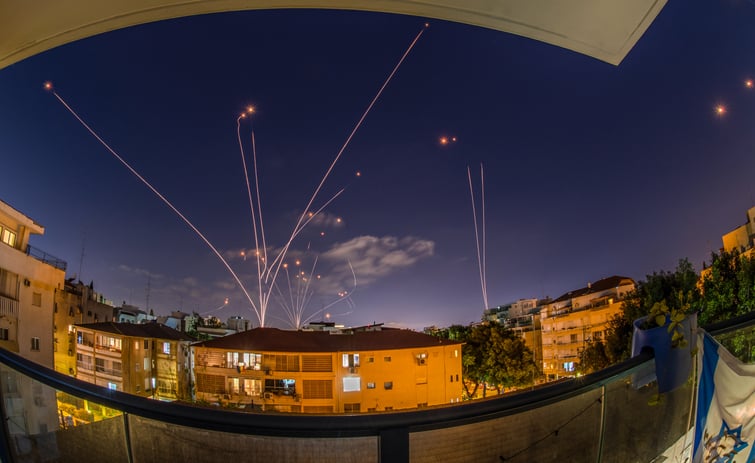
The conflict in the Middle East has triggered a wave of supply chain disruptions that extend far beyond oil and natural gas, affecting industries from automotive to pharmaceuticals, according to experts on a Resilinc webinar last week.
What began as a regional geopolitical escalation is now rippling through global networks via transportation bottlenecks, raw-material shortages and supplier constraints, panelists said during “Navigating the Middle East Conflict and Its Global Supply Chain Impact.” Early warning signs have already emerged in freight markets and supplier communications, with more severe impacts expected in the coming months.
The current disruption is the culmination of tensions — including intermittent military exchanges like Israel and Iran’s 12-day war in 2025 — that have been building for three years, said Shahzaib Khan, associate vice president, product management at Resilinc, a Milpitas, California-based provider of supply chain risk-management research and analytics.
“This is not a one-off event,” Khan said. “It’s part of a chain of escalations we’ve been tracking for years.”
Since U.S. and Israeli forces struck Iran on February 28, Resilinc has identified a surge in force majeure declarations — legal provisions that allow suppliers to halt deliveries due to extraordinary circumstances. Such declarations are now affecting not only companies in the conflict zone but also suppliers in countries across Asia.
The disruptions are impacting three critical areas: maritime shipping, airfreight and industrial supply chains. Shipping routes have been disrupted because of security concerns, leading to increased transit times and costs.
Some vessels remain idle due to restricted access to key waterways, most notably the Strait of Hormuz, while airfreight capacity has been sharply reduced. Thousands of flights have been canceled and rerouted shipments are adding hours to delivery times, further straining global logistics networks.
“These are the kinds of early signals we watch for,” said panelist Ranna Rose, global director, supply chain risk management at Olympus, a Japanese manufacturer of optics and reprography products. “Freight premiums spike, routes change and supplier responses slow down before you ever see a shortage.”
A Wide Net of Affected Products
Rose said her industry has not yet experienced widespread shortages, but the warning signs are clear. Allocation measures for critical materials such as resins and specialty chemicals are beginning to appear, along with longer lead times for electronic components.
For manufacturers, raw material constraints have had the biggest impact. Many of these inputs are derived from petrochemicals, which are closely tied to oil and gas production in the region. But Khan emphasized that the disruption extends well beyond energy.
Resilinc’s analysis identified more than 3,600 Harmonized System (HS) codes originating from the affected region. These product categories include plastics, synthetic rubber, specialty chemicals and agricultural inputs, all of which feed into a wide range of industries.
“These materials are embedded in everything from automotive components to medical devices,” Khan said. “If you follow the chain, the impact is far broader than most companies initially assume.”

Clockwise, from top left: Adam Bartlett, director of expert services, life sciences at Resilinc; Ranna Rose, global director, supply chain risk management at Olympus; Shahzaib Khan, associate vice president, product management at Resilinc; and Paul Rossi, director of expert services, automotive at Resilinc, discuss supply chain issues stemming from conflict in the Middle East during a webinar last week.
More than 11,000 suppliers and 100,000 products could be affected, according to a Resilinc estimate, with potential revenue exposure approaching US$460 billion. Recovery times for disrupted manufacturing and distribution operations could stretch to five months or more.
Panelist Paul Rossi, director of expert services, automotive at Resilinc, said the situation is reminiscent of past disruptions, such as the 2021 Texas freeze that crippled petrochemical production in the U.S.
Companies should draw on that experience to respond more effectively, he said: “One of the key lessons is to avoid overreliance on single-source materials. You need to engineer for resilience, not just cost or performance.”
Risk-mitigation strategies include preapproving alternative materials and suppliers and diversifying sourcing strategies. Even companies that maintain buffer inventories, Rossi said, could face challenges if logistics networks are disrupted.
“Inventory can give you a false sense of security,” he said. “If you can’t move it, it doesn’t matter how much you have.”
In the pharmaceutical and life-sciences sectors, the risks are compounded by strict regulatory requirements. Adam Bartlett, another panelist, said companies face a difficult balancing act between responding to disruptions and maintaining compliance with safety standards.
“Buying from alternative suppliers, rerouting shipments and substituting materials quickly can trigger regulatory reviews,” said Bartlett, director of expert services, life sciences at Resilinc. “It’s not so easy to just change lanes.”
Visibility and Lower-Tier Exposure
The most immediate concerns for the sector include cold-chain logistics and the transport of high-value, temperature-sensitive products like vaccines. These shipments depend on reliable airfreight, making them particularly vulnerable to disruptions.
Panelists agreed that the most significant risks often lie deeper in the supply chain, beyond direct vendors. Sub-tier dependencies — like raw material producers and component manufacturers — can create hidden vulnerabilities.
“The real exposure is not at Tier 1,” Rose said. “So, make sure that deeper down you go into your supply chain and start looking at the ripple effect.”
To address this, companies are increasingly turning to digital tools that map supply chain relationships across multiple tiers. Resilinc’s platform, for example, uses a combination of supplier data and artificial intelligence to identify connections and assess risk.
Khan said such tools are essential in fast-moving situations, allowing companies to conduct “what-if” analyses and prioritize their responses. He also recommended expanding risk assessments beyond the immediate conflict zone, as disruptions are spreading to other regions through interconnected supply networks.
Looking ahead, panelists outlined a phased progression of impacts. In the near term, companies can expect continued cost increases and supply constraints for key materials. Over time, these pressures may lead to production slowdowns, inventory imbalances and price corrections.
Despite the uncertainty, panelists emphasized the importance of prompt action. In the first 72 hours after a disruption, companies should focus on identifying exposed products and suppliers, prioritizing critical risks and establishing a coordinated response: “The goal is to move from alerts to actionable insights as quickly as possible,” Rose said.
In a post-coronavirus pandemic world, the conflict in the Middle East is just another reminder for companies and procurement organizations of the interconnectedness — and fragility — of global supply chains.
“This is not contained to one region or one industry,” Khan said. “It’s a global event, and companies need to respond accordingly.”
(Top photo credit: Getty Images/Oren Ravid)