
Tariffs: Questions and Uncertainty Remain After Supreme Court Ruling

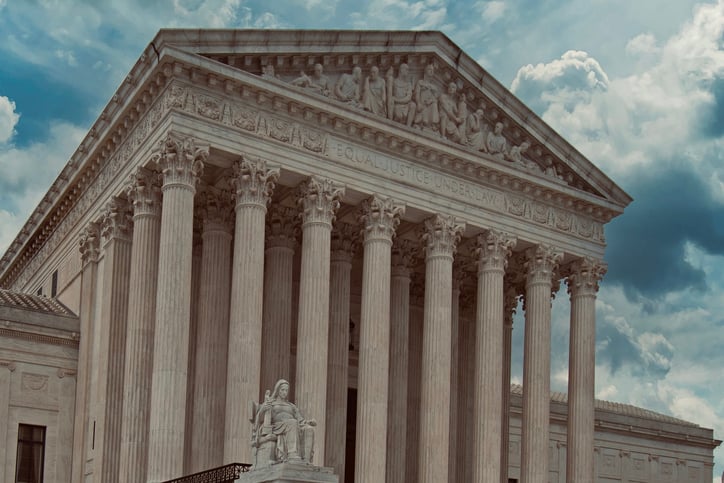
Despite the U.S. Supreme Court ruling on Friday that the International Emergency Economic Powers Act (IEEPA) doesn’t give President Donald Trump the power to impose tariffs, uncertainty still reigns.
The U.S. Customs and Border Control issued a statement that IEEPA-imposed tariffs are no longer being collected as of 12:01 a.m. ET today.
Trump responded Friday to the Supreme Court (SCOTUS) decision, which was via a 6-3 vote, by imposing 10 percent tariffs on all imports to the U.S., a percentage he raised to 15 percent on Saturday. On social media, Trump said, “During the next short number of months, the Trump Administration will determine and issue the new and legally permissible tariffs …”
The Supreme Court struck down President Trump’s sweeping global #tariffs in a 6–3 ruling, saying the Constitution gives Congress — not the president — the power to impose taxes, including tariffs. The White House has long insisted it has a Plan B, however. https://t.co/LWqnlvmafK
— Institute for Supply Management (@ism) February 20, 2026
Among the uncertainties: Are the new tariffs valid and enforceable? When exactly do they start? Will there be refunds on already paid tariffs? Will the new tariffs supersede other tariffs? What happens if the 15 percent tariffs are higher than the previously agreed upon percentages?
Questions Abound
The European Union on Monday hit the pause button on ratification of its tariff agreement with the U.S., saying it wanted clarification. Other countries also are reportedly revisiting their tariff agreements. Trump said on social media that countries that, in his words, “play games” after the Supreme Court decision “will be met with higher (tariffs).”
According to Section 122 of the Trade Act of 1974, the U.S. can impose temporary across-the-board tariffs “to deal with large and serious United States balance-of-payments deficits.” Fifteen percent is the maximum level; such duties expire 150 days after implementation unless extended by Congress.
The on-again, off-again, on-again nature of the situation poses many questions for supply management practitioners, says Susan Spence, MBA, Chair of the Institute for Supply Management®’s (ISM®) Manufacturing Business Survey Committee.
“The real question is: Is this more turmoil?” she says. “Or is the issue resolved enough for orders to start flowing? What will the customers do? Will the SCOTUS ruling give customers confidence to start ordering again? Will it keep manufacturing in expansion?”
The ISM® Manufacturing PMI® for January registered 52.6 percent; it was the first in expansion in a year and the highest since August 2022 (53 percent). While one month is not a trend signaling a turnaround for the U.S. manufacturing sector, nevertheless, when it was announced, Spence commented, “Take the win.”
The Congressional Dilemma
While part of the recent uncertainty surrounding the IEEPA tariffs has been answered by the Supreme Court decision, Spence says, that the Trump administration leveraged another policy to impose tariffs was expected.
The 150-day limit is temporary. But is it?
Congressional approval for a longer time period is up in the air: CNBC reported it creates “the potential for a difficult vote on an unpopular issue for congressional Republicans in the midst of election season.” With public sentiment largely against tariffs, extending them would be an unpopular policy.
We are 4 hours out from Section 122 duties being collected, and CBP just sent around a notice to importers that the Section 122 rate due is 10%. Trump can still try to raise the rate at a later date, but for now, despite his Saturday tweet, the actual rate is 10%, not 15%.
— Peter Harrell (@petereharrell) February 24, 2026
“We've been saying that the tariff chaos has to end by court rulings, but if you’re just going to go get them another way, there’s going to be more court rulings,” Spence says. “And the administration will need to believe that there’s a harmful effect on the manufacturing economy versus what you think you’re going to get in revenue.”
She continues: “(There are) more questions than answers, but at least there’s no appeal after the Supreme Court. That’s good news.”
Scott Lehman, vice president of product management, operational risk and supply chain at Sphera, notes, in a statement, that, “(Friday’s Supreme Court) ruling may feel like a resolution, but supply chain leaders should not interpret it as stability returning to the system. The effective tariff rate drops, but it does not return to anything close to the pre-2025 baseline.”
The Refund Question
What's missing from the Supreme Court decision “is some direction from the court on who will be responsible for implementing a refund process,” Nick Baker said in a statement.
Based in Houston, he is managing director in the transfer pricing practice and co-leads of the trade and customs practice at global risk and financial advisory firm Kroll. “There should be more clarity in the coming weeks, but importers should already be collecting tariff and trade data to be prepared for any administrative refund process.”
Lehman noted that refunds won’t be immediate or automatic, and will require clean, multitier documentation that most companies do not have readily available. “If claims accumulate at scale, the process could stretch for years,” he said. “Organizations with structured supplier data across multiple tiers will be significantly better positioned than those relying on ad hoc records.”
Per Hong, global lead of Kearney Foresight and a partner in management consultancy Kearney’s strategic operations practice, said, in a statement, that any reimbursement process “is likely to move through the customs liquidation system and would be administratively slow, burdensome, and likely drawn out over years. This means companies should not assume rapid balance-sheet relief.”
Don’t Sit Back and Wait
Still, supply management organizations need to prepare now.
Due to the procedural complexity and potentially significant sums involved, DWF Legal Operations, a global provider of legal services, recommends that organizations immediately conduct a tariff exposure audit with their in-house legal counsels.
The audit should identify all goods subject to IEEPA-based tariffs and quantify the duties that were paid and determine their liquidation status, DWF said in a statement. Create a calendar showing deadlines for filing post-summary corrections (PSCs) to correct entries and claim refunds on duties for unliquidated goods as well as protests. Also, coordinate closely with customs brokers and trade compliance teams.
Other steps, according to DWF’s executive vice president and chief legal officer George Hefferan, Walter Scott Wilkens, head of delivery for North America at DWF and DWF’s Mary Beth Decker, along with the Association of Corporate Counsel, are:
- Consider filing protective PSCs where goods liquidation has not occurred. Are liquidation extensions appropriate? For liquidated entries, immediately assess protest deadlines.
- Gauge whether to initiate or join U.S. Court of International Trade (CIT) proceedings. Are suspension-of-liquidation strategies applicable? Also, weigh the potential recovery costs versus litigation cost and business disruption.
- Determine if refund recoveries may be recognized under applicable accounting standards. Evaluate your disclosure obligations in light of contingent asset rules. What are the implications for earnings guidance?
As the refund question doesn’t end at Customs, organizations should review their contractual and supply chain exposure, DWF noted: “In-house counsels should examine whether (1) tariff costs were passed downstream through pricing adjustments, (2) contracts allocate responsibility for seeking rebates and (3) counterparties may assert reimbursement claims if refunds are obtained.”
Imagine that you need to order $100,000 worth of imported raw materials right now (for, say, your American manufacturing company).
— Eric Boehm (@EricBoehm87) February 24, 2026
Is the tariff cost $10,000 or $15,000?
And if you pay $10k and then find out the tax was illegal, can you be sure you'll get a refund?
Drew DeLong, principal at Kearney, suggested in a statement that organizations get their documents in order and get ready on the data front. “Collect historical duty payment data and supporting documentation for IEEPA duties paid since April 2, and watch carefully for any signs of refund protocol announced.”
He recommends running a 10 percent to 15 percent scenario through the end of July, keeping current rates where they are below 15 percent, capping higher rates at 15 percent, then running post-July scenarios where tariffs hold flat or revert toward prior reciprocal structures.
Stress test Section 232 exposure. Map your HTS footprint to active investigations and assume scope expansion is more likely. Pressure test North America supply exposure ahead of the U.S.-Mexico-Canada Agreement (USMCA) joint review in July. Model higher USMCA compliance thresholds, more verification activity, and tighter rules of origin. Assume the White House pushes harder now.
Supply Management Responses
After the Supreme Court decision, supply management practitioners, consultants and providers across industries offered their thoughts, opinions and questions via statements. Here are some of them:
Brian Higgins, U.S. sector leader for industrial manufacturing at KPMG LLP: “Many important questions remain for manufacturers following today’s decision and further developments. Supply chain considerations will continue to play a central role, requiring manufacturers to remain flexible as they reassess sourcing, production and logistics decisions. In the face of uncertainty, scenario planning and resilience-oriented approaches will be critical to remaining competitive as the trade and tariff landscape remains fluid.”
Dean Alms, CPO of Aravo: “Companies must adopt a ‘now, next, later’ strategy. Now: Pinpoint suppliers exposed to active tariffs and address immediate cost and compliance gaps. Next: Pressure-test product margins against prolonged and potential new duties. Later: Reduce concentration risk by diversifying and regionalizing supply chains before the next policy shift.”
Don Mabry, senior vice president of global trade solutions at Infios: “What we’re likely to see now is stronger demand for trade compliance automation and post-entry recovery tools — because when tariff rules shift, companies don’t just need visibility, they need systems that can quickly turn regulatory change into real cash recovery and clean, defensible compliance.”
John Lash, group vice president of product strategy at e2open, a WiseTech Global company: “For supply chains it means one thing, more uncertainty. What, when, and how will the next tariff actions come? But not knowing in what form, for what rates for what goods, from which countries, and when it will be enforced makes business decisions hard.
“One prediction: Once people get a better sense of the gap between IEEPA duties no longer collected and when a replacement is expected to come, we’re likely to see a surge of orders to get ahead of the next window, similar to a holiday sales tax. As a result, a lot of companies will go for this route, taking the chance that the reimposed tariffs won’t be retroactive.”
(Photo credit: Getty Images/Douglas Rissing)