
Potential New European Tariffs, Greenland and the Nobel Peace Prize

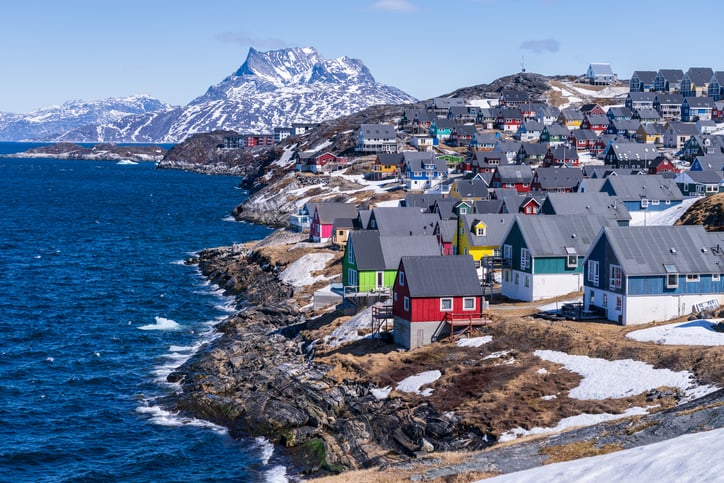
President Donald Trump has threatened to slap 10 percent tariffs on a bloc of eight European countries beginning February 1 in the hopes they will come together to convince Denmark to sell Greenland to the U.S.
On Sunday, European nations came together — and determined that instead they would impose 93 billion euros (US$109.2 billion) worth of tariffs against the U.S.: “During a three-hour meeting in Brussels on Sunday, diplomats from the bloc’s 27 governments underscored the importance of readying tangible options to fight back against Trump in case talks with Washington over the coming week don’t lead to a swift resolution, the officials said,” Politico.eu reported.
A CNN headline described the situation as: “Trump has tariffs. Europe has a ‘trade bazooka.’ This Greenland standoff could get ugly, fast.” The article notes that the new tariffs “could result in significantly higher import prices that could weaken both economies.”
Since then, European leaders have further questioned Trump’s move, saying there needs to be respect for international law, that cooperation is crucial, and that a trade deal between Europe and the U.S. was already agreed upon in July — and “a deal is a deal.”
Why Greenland?
Trump has claimed his pursuit of Greenland was due to not having received the Nobel Peace Prize. The New York Times printed an exchange between Trump and Norway’s prime minister, Jonas Gahr Store, in which Trump stated that because Norway “decided not to give me the Nobel Peace Prize for having stopped 8 Wars PLUS [sic], I no longer feel an obligation to think purely of Peace, although it will always be predominant, but can now think about what is good and proper for the United States of America.”
He also questioned Denmark’s connection to Greenland: “Denmark cannot protect that land from Russia or China, and why do they have a ‘right of ownership’ anyway? There are no written documents, it’s only that a boat landed there hundreds of years ago, but we had boats landing there, also.”
Copies of Trump’s letter to Store were also forwarded to European ambassadors, PBS reporter Nick Shifrin said on X, formerly known as Twitter.
Trump also has claimed that the U.S. needs Greenland for security reasons: in case of attack from China or Russia. A third reason: the country’s underground rare earth minerals.
The Waiting Game
On Saturday, Trump threatened 10 percent tariffs on France, Sweden, Norway, Denmark, Germany, Great Britain, Finland and the Netherlands.
“Trump officials view Greenland’s underground riches as a way to loosen China’s stranglehold over the rare-earth metals that are critical for everything from fighter jets and lasers to electric vehicles and MRI scanners,” a CNN article states.
The New York Times reported: “(United Kingdom) Prime Minister Keir Starmer told President Trump in a call on Sunday that it would be wrong to impose tariffs on NATO allies as part of a pressure campaign to take control of Greenland, according to a spokesman for the prime minister.”
As of yet, Trump has not indicated he will back down. Earlier in January, he told reporters aboard Air Force One, “We need Greenland. … It’s so strategic right now.”
The New York Times reported that European officials prefer negotiation over retaliation, but that “they are also committed to protecting Greenland, an autonomous territory of Denmark, from being bought or taken over if that is not what its people want.”
Fishing is the main industry of Greenland, which has a population of 56,000 and a wealth of mineral and rare earth reserves, including uranium, copper, gallium and graphite. Many of the minerals are essential for battery production, electrical infrastructure and/or high tech and defense applications.
Greenland, however, lacks the infrastructure and production capabilities to mine the reserves on a large scale. The Atlantic Council reports: “Greenland’s strategic value lies in its role as a long-term diversification partner in a concentrated global market, rather than an opportunity for immediate production.”
Discussions at Davos
On X, the secretary general of NATO, Mark Rutte, posted Sunday: “Spoke with (Trump) regarding the security situation in Greenland and the Arctic. We will continue working on this, and I look forward to seeing him in Davos later this week.”
The World Economic Forum’s annual meeting in Davos, Switzerland runs through January 23; Trump is expected to attend with a delegation of U.S. officials.
On Monday, in an article headlined “Donald Trump’s Greenland Tariffs Are No Great Blow to Europe,” The Economist noted that “Europeans are no longer shocked by the threat of tariffs.” A war would be another thing, it said: “Should the economic war go beyond tariffs, however, all bets are off.”
European leaders are expected to meet on the matter this week in Brussels. Trump is slated to speak in Davos on Wednesday.
A Monday news analysis in The New York Times points out that long-time observers say the alliance established between the U.S. and Europe after World War II has changed course, as it is no longer a purpose-driven alliance between like-minded democracies. “There appears to be a consensus in much of Europe that it needs to build new economic and military capacities to make it less dependent on the United States,” it stated. But that will take years.
During a press conference on Tuesday, Greenland prime minister Jens-Frederik Nielsen called a military invasion unlikely but cautioned that the nation should start preparing for one nevertheless. Bloomberg reported that Nielsen said a task force “consisting of representatives of all relevant local authorities to help people prepare for any disruptions to daily life” will be set up.
(Photo credit: Getty Images/Backyard Production)