

ISM® PMI® Reports Roundup: December Manufacturing

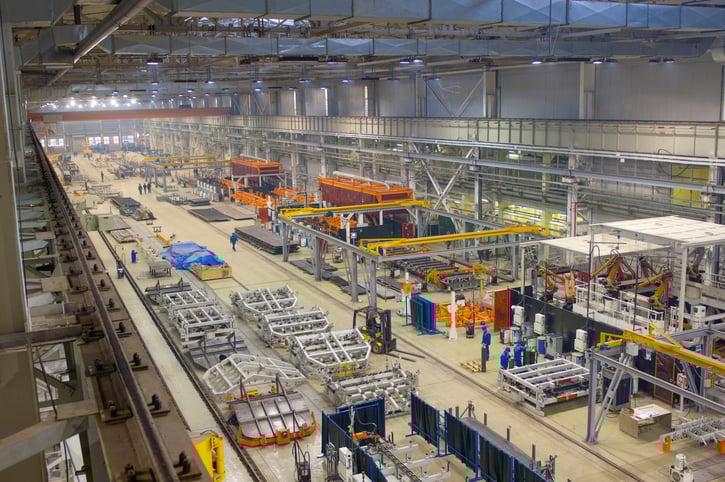
The ISM® Manufacturing PMI® Report for December was an appropriate swan song for 2025, as it hit all of the gloomy notes — continuing sluggish demand, trade and tariffs anxieties, and economic and geopolitical uncertainty — that typified the year.
Those themes were evident in the data and panelist sentiment that added up to a PMI® reading of 47.9 percent, the lowest in 2025 and 1 percentage point below the 12-month average. Also, many purchasing and supply executives woke up on Saturday morning to news that only added to the uncertainty; more on that later.
“You could say it’s just a stack up from the entire year, with the kinds of trends that have led to the PMI® contracting for 10 straight months,” Susan Spence, MBA, Chair of the Institute for Supply Management® (ISM®) Manufacturing Business Survey Committee, told a conference call of reporters on Monday.
Soft ISM manufacturing
— Joe Weisenthal (@TheStalwart) January 5, 2026
“How long will it take to turn around? New orders need to improve for four of five months, which will flow to production and backlogs, and everything should follow. (But until then), it’s a downward trend.”
For those looking for a ray of sunshine in the December data, the demand indexes — New Orders, Backlog of Orders, and New Export Orders — all improved, though they remained in contraction. And the Customers’ Inventories’ Index moved even further into “too low” territory, suggesting that companies have to reorder at some point.
However, the wait for “some point” has been months, and two indexes that directly factor into the PMI® indicate that companies will believe demand is back when they see it.
The Employment Index registered 44.9 percent — in contraction territory for 18 of the last 19 and 37 of the last 44 months — as just 9 percent of companies surveyed in December reported adding staff. The Inventories Index fell 3.7 percentage points to 45.2 percent, as buying is eschewed in favor of dipping into current stock levels.
“Panelists are saying that tariffs and the continued economic uncertainty are having an impact on inputs,” said Spence, who noted that the Imports Index dropped 4.3 percentage points to 44.6 percent. “With weakened demand, staff reductions and continued price increases, that adds up to a struggling economy due to the uncertainty.”
This past weekend’s U.S. operation in Venezuela, in which that country’s president, Nicolás Maduro, was ousted and brought to a New York courtroom on drug trafficking and other federal charges, exacerbates the situation.
Comments in the ISM manufacturing report are utterly bleak. pic.twitter.com/188fkeFWNQ
— investingLive (@investingLive_) January 5, 2026
Led by energy and defense stocks, markets rose on Monday, but the Trump administration’s plan to seize Venezuela’s oil industry and rebuild its infrastructure has ramifications — none of them simple, quick or cheap — for the Petroleum & Coal Products industry, as well as the entire manufacturing sector.
“I guess it depends on what the plan is and if the country can come roaring back,” Spence said. “How long will it to start producing? What happens to U.S. oil prices? What happens to Middle East prices? This is new territory.
“Those are questions that are best for oil companies. If you were a U.S. oil company and you were encouraged to go in and put a lot of money into a country where it’s unstable, would you do it with no guarantee that it wouldn’t hurt your company’s financial reserves?”
It was a year of sluggishness for Petroleum & Coal Products (which expanded in just four of 12 months in 2025) and the other big six manufacturing industries, Spence said in the conference call and elaborated in ISM’s LinkedIn Live broadcast on Monday. Chemical Products, a bellwether industry, expanded in three of 12 months, as did Transportation Equipment.
Computer & Electronic Products expanded in six of 12 months, including a second-half surge likely fueled by the data center explosion in many parts of the country. (And if that’s part of an AI bubble, Spence added, what happens if it pops?)
Chemical Products is the biggest manufacturing industry, at 20 percent of the sector’s gross domestic product (GDP). Transportation Equipment is second, at 16 percent. With those industries and others continuing to be sluggish, a whopping 85 percent of manufacturing GDP was in contraction in December, up from 58 percent the previous month.
“We’re not ending the year the way we started it,” Spence said, “but it’s not the clarity everyone was hoping for by now.”
The ISM® PMI® Reports roundup:
Barron’s: U.S. Manufacturing Activity Contracted to Close Out 2025. “There isn’t a lot of good news in the report. … The (markets) rise can signal that investors expect improvement. It can also mean, however, that different sectors are thriving while others struggle. Things tied to aerospace and AI are seeing strong demand. Nothing much else is.”
Bloomberg: U.S. Factory Malaise Continues as Gauge Drops to One-Year Low. “One bright spot in the report was customer inventories shrank at the fastest pace since October 2022, suggesting factory orders and production could firm in coming months. Still, tariffs and the overall economic uncertainty that President Donald Trump’s shifting trade policy caused during his first year in office have proved challenging for many companies as they weighed expansion plans.”
CNBC: ISM Manufacturing Gauge Missed Forecast for December. “We were expecting a number below 50 percent and around 48.5 percent. It comes it light: 47.9 percent,” analyst Rick Santelli said. “So, this would be the 10th consecutive read under 50 percent; only the first two months of (last) year were above 50 percent.”
Logistics Management: Manufacturing Output Declines for 10th Consecutive Month, Reports ISM. “Susan Spence, Chair of the ISM’s Manufacturing Business Survey Committee, observed that December wrapped up a year of manufacturing uncertainty, with December turning in 2025’s lowest PMI® reading.”
MarketWatch: U.S. Manufacturing Slump Shows Little Sign of Ending, ISM Shows. “Carl Weinberg, chief economist at High Frequency Economics, said “the manufacturing sector is sick” and does not appear to be responding well to President Donald Trump’s economic policies. On the other hand, Thomas Simon, chief U.S. economist at Jefferies, said he is expecting better days for the manufacturing sector (due to ‘One Big Beautiful Bill’ tax incentives).”
On January 5, the GDPNow model nowcast of real GDP growth in Q4 2025 is 2.7%: https://t.co/T7FoDdgYos.
— Atlanta Fed (@AtlantaFed) January 5, 2026
Download our EconomyNow app or go to our website for the latest GDPNow nowcast: https://t.co/NOSwMl7Jms. pic.twitter.com/7HUskUnm02
Reuters: U.S. Factory Sector Contracts for 10th Straight month in December. “(B)eyond the sectors lifted by an Artificial Intelligence investment boom, Trump's sweeping import duties have undercut manufacturing, even as he touts them as necessary to shore up a long-declining domestic factory base. Economists have argued it is impossible to restore the industry to its former glory because of structural issues, including worker shortages.”
The Wall Street Journal: U.S. Factory Activity Slides Unexpectedly. “(T)he Prices Index continued to expand at the same pace as in November, indicating that raw materials prices increased for the 15th straight month. This could add to concerns at the Federal Reserve over further easing of interest rates this year following a cut in December. … Tariffs also remained a major concern.”
The ISM® Services PMI® Report will be unveiled on Wednesday. For the most up-to-date content on the ISM® PMI® Reports, use #ISMPMI on X, formerly known as Twitter.
(Photo credit: Getty Images/ElenaPhoto)