
Compliance as Growth: Executable Governance in the Cross-Border Supply Chain

Modern supply chains no longer compete primarily on cost. They now compete on compliance velocity, the speed at which organizations can move goods while remaining aligned with changing regulations.
Each international shipment must pass through several checkpoints, including supplier verification, export licensing, customs classification, and environmental, social and governance (ESG) documentation. When these steps rely on manual review or disconnected systems, the result is shipment holds, inconsistent filings and growing audit risks.
Two operational frameworks can make compliance executable within digital supply chain systems. Configurable compliance architecture (CCA) is a modular infrastructure that embeds trade regulations directly into operational workflows. Executable governance equation (EGE) is a computational model that converts governance from a static policy into a real-time decision logic.
Together, they help organizations transform compliance from a cost center into a growth enabler that accelerates trade operations and strengthens trust with regulators and partners.
The Hidden Cost of Manual Compliance
According to U.S. Customs and Border Protection (CBP) trade compliance and enforcement procedures, the top causes of customs delays include (1) incomplete export proofs, (20 misclassified harmonized system (HS) codes and (3) outdated supplier data. Each minute of delay at a port or bonded warehouse increases uncertainty and cost. The root cause is that compliance often exists only in documents, not in the systems that execute trade.
To meet the demands of modern logistics, compliance must evolve from a review function to a real-time validation process operating across the same digital infrastructure that moves goods and payments:
EGE approach. In this model, EGE defines governance scalability as an operational function evaluated for each transaction. As an equation, governance scalability = (operational transaction type × jurisdiction context × entity identity), evaluated through (runtime logic units + eligibility gates + trace logs). The formulation presented here reflects a practitioner-oriented adaptation designed to make governance logic operational within digital systems.
This approach reframes compliance as an automated decision-making process that applies the correct rules at the right time for every shipment or payment.
Each transaction is validated across these components in milliseconds. If any gate fails, the system automatically stops or redirects the process for review. The result is a governance ledger, a transparent and traceable record of every compliance decision.
CCA approach. CCA extends the EGE across the entire trade life cycle, from PO to payment settlement. Each compliance checkpoint is standardized as an event layer, connected via APIs across procurement, logistics and finance systems. (See Table 1.)
Key event layers are:
- PO creation. Validate a supplier’s tax IDs and sanctions status under the U.S. Department of the Treasury’s Office of Foreign Assets Control. Confirm that controlled goods and restricted jurisdictions are flagged early.
- Shipment booking and drayage dispatch. Verify that carrier credentials and export licenses are in accordance with the U.S. Department of Transportation’s (DOT) drayage requirements as well as state and port-authority clean-fleet and truck-operator compliance rules.
- Customs clearance. Apply rule-based tariff classification and alert on de minimis threshold breaches following CBP procedures.
- Warehouse entry and fulfillment. Check labeling and storage compliance before goods enter the domestic inventory.
- Payment settlement and reporting. Validate beneficiary bank accounts under the U.S. Financial Crimes Enforcement Network (FinCEN)’s anti–money laundering and beneficial ownership For charitable exports, confirm routing to IRS-approved entities listed in Publication 78 (2024).
Through these layers, compliance becomes part of the operational flow rather than an afterthought.
An Example in Practice
A global electronics exporter based in Texas managed shipments to multiple countries in Southeast Asia. Its previous process relied on manual license verification by brokers, leading to unpredictable delays and repeat inspections.
After adopting a CCA layer that connected supplier data, export license records and shipment routing application programming interfaces (APIs), the company significantly reduced clearance time and error rates. The system automatically flagged expired export permits and validated carrier credentials in real time through the DOT’s registry.
By shifting compliance checks from post-review to in-process validation, the organization transformed compliance from a reactive cost center into a preventive, auditable and efficient system.
Multi-Entity Orchestration
A single cross-border order can involve exporters, freight forwarders, customs brokers, warehouses and distributors. The CCA approach manages this complexity by dividing transactions into governance units (GUs), each representing a self-contained compliance domain. These GUs are evaluated independently and reassembled after validation.
Each GU runs its EGE computation and reports a compliance result to the orchestration layer. For example:
- When there is an “all pass” result: the shipment proceeds
- One conditional: initiate a partial hold or manual review
- One fail: block the specific SKU
- Multiple fails: hold the full shipment.
The orchestrator then generates a compliance summary envelope, a consolidated record that auditors and regulators can verify efficiently without manual tracking.
AI-Enabled Governance and Predictive Risk
An AI layer in the CCA continuously learns from event outcomes and dynamically adjusts thresholds. This enables compliance logic to evolve as trade behavior and regulations change. (See Table 2.)
For example, a large consumer electronics exporter applied CCA’s AI module to its Asia-U.S. lanes. The system detected recurring undervaluation anomalies in low-value shipments and automatically adjusted its duty-free validation thresholds. It also parsed updates from CBP’s 2024 tariff notices, generating new validation logic within hours; this previously took several days of manual configuration.
In the future, AI models can further assist by simulating “what-if” governance scenarios — such as how a new tariff or licensing rule might affect lead times — allowing supply managers to proactively adapt compliance policies.
In short, AI turns governance from a static checklist into a living, learning system that continuously strengthens supply chain integrity.
Maturity Levels of Governance Integration
Organizations differ widely in how deeply compliance is embedded into their operations, and this variation affects speed, scalability, and audit readiness. The more mature an organization is, the more advanced its governance. (See Table 3.)
Organizations at Level 4 or higher achieve faster supplier onboarding, fewer customs disputes, and improved audit traceability. Level 5 adds predictive governance, enabling the system to identify risks before they occur.
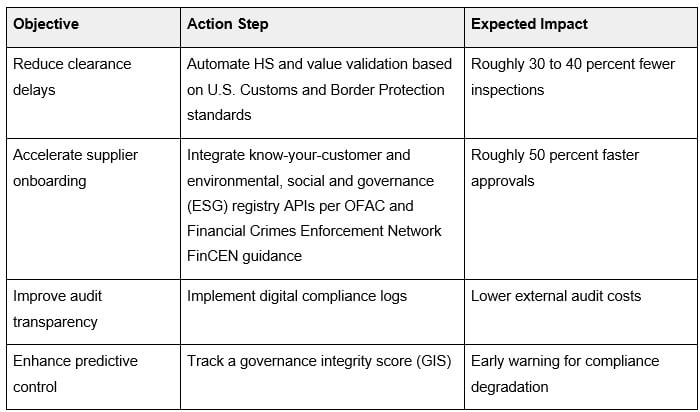
Compliance has strategic implications for supply management professionals. (See Table 4.) As infrastructure, it builds resilience. Systems that self-validate reduce manual oversight and regional risk. Governance APIs enable scalability. Teams can expand into new markets without rewriting processes.
AI governance enhances competitiveness. Predictive insights improve capacity planning and reliability. Digital audit readiness builds trust. Machine-readable traceability supports ESG and forced-labor compliance reviews.
Global supply chains operate at the intersection of data, duty and accountability. Compliance can no longer remain a static checklist; it must become an active system function.
CCA and EGE provide a pathway to embed governance as code, ensuring that speed and integrity evolve together. When every shipment carries digital proof of compliance, trade trust scales naturally.
Table 1: Configurable Compliance Architecture Event Layers
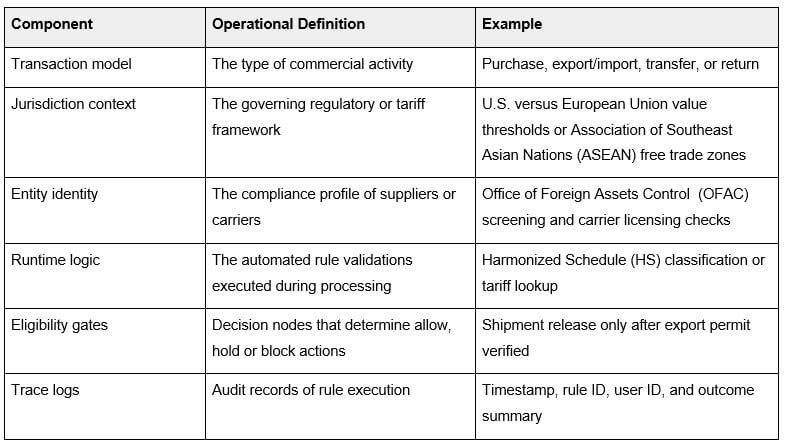
Table 2: AI-Enabled Governance Applications
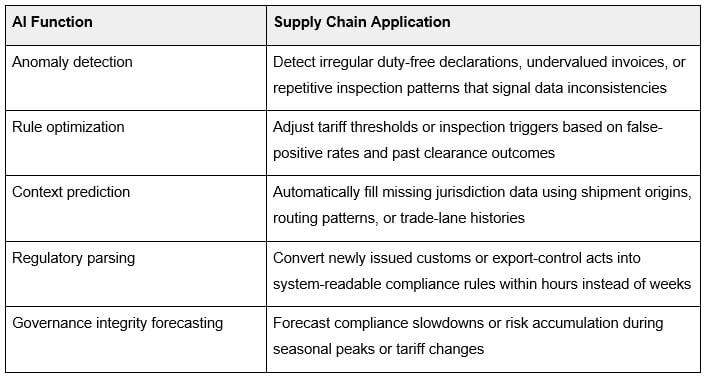
Table 3: Governance Maturity Curve
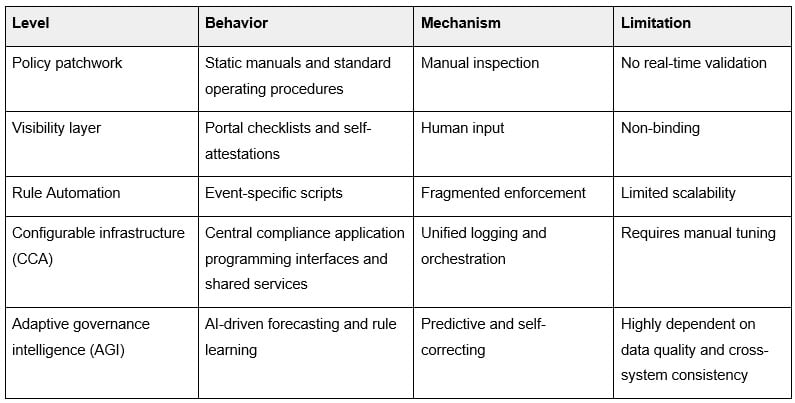
Table 4: Cross-Border Leadership Playbook
(Photo credit: Getty Images/Jann Huizenga)