
Supply Chain Roundtable: Lessons Learned as the Calendar Turns

When their holiday respites end and they prepare to resume work in the new year, supply management professionals are likely to have consensus sentiment: Good riddance, 2025.
Yes, it was a 12-month span of disruptions and challenges, but can’t that be said of just about every year since the start of the trade war in 2018? It’s much more productive to focus on lessons learned and how to avoid or mitigate calamities in the new year, and the roundtable of experts from Institute for Supply Management® (ISM®) will oblige.
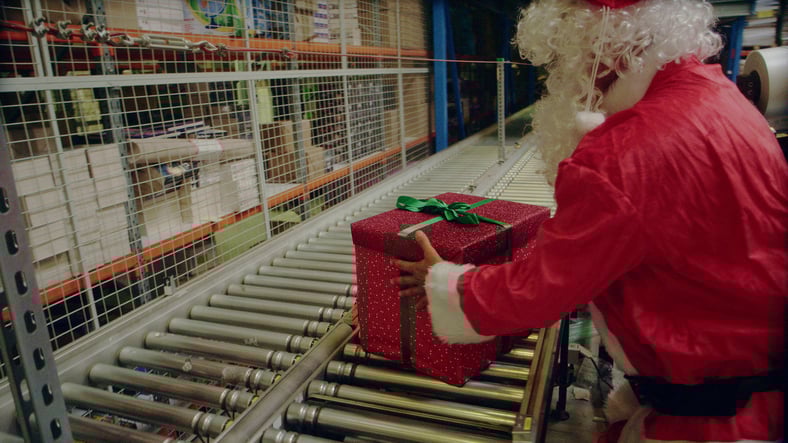
The panel — Thomas W. Derry, ISM CEO; Jim Fleming, CPSM, CPSD, Manager, Product Development and Innovation; Michelle Rohlwing, MBA, Manager, Product Development, Innovation and Learning; and Linda Aaron, MBA, Subject Matter Expert — looks back on 2025. The foursome also shares what’s on their supply chain wish lists, with one request that would be hard for even Santa to procure.
Q: What was the biggest supply chain lesson learned in 2025?
Derry: The Trump Administration’s walking back of many tariffs, which has become known as the TACO trade — as in “Trump Always Chickens Out” — on Wall Street. A broadbrush approach to tariffs fails to take into account that certain products are not manufactured in the U.S., that we don’t grow certain agricultural products on U.S. soil, and that, in general, we live in an interdependent global economy.
Fleming: Tariffs were (are) just a speed bump in the bigger picture of global supply chains, and many successful organizations are reacting to accommodate. Inventory strategies, supplier engagements, alternative supplier qualifications, and better risk mitigation planning have enabled supply chain professionals to weather the storms. This is a sign that organizations are shifting toward strategic transformation and gaining a bigger seat at the table.
Rohlwing: Uncertainty and volatility are the new normal. Big global curveballs aren’t going away. I think conflicts, inflation, tariffs, climate chaos, and even cyber threats will continue. The previously popular just-in-time methodologies are way too fragile for today’s market. These days, it’s all about building resilience and flexibility first and hopefully developing efficiency along the way.
Aaron: The biggest lesson of 2025 is that resilience and agility are no longer optional; they are the foundation of competitive advantage. For years, manufacturing focused on efficiency and cost reduction, but this year showed that those metrics alone cannot sustain growth in a volatile environment. Disruptions from geopolitical tensions to raw material shortages exposed the fragility of traditional supply chains. Organizations that succeeded were those that invested in end-to-end visibility and built flexibility into sourcing strategies. Real-time data integration across suppliers, logistics and production allowed leaders to pivot quickly when conditions changed. For small businesses, the message is clear: Scalability starts with adaptability. Building collaborative networks, leveraging shared resources and adopting digital tools early can turn vulnerability into strength.
Equally important is the shift toward TCO thinking. It is no longer enough to chase the lowest unit price. Leaders must take ownership of the entire life-cycle cost, including quality, risk exposure, sustainability and supplier capability. Looking beyond the immediate scope to understand long-term impacts on resilience and profitability is now a strategic imperative. This is not just an operational shift; it is a cultural one. Companies must embrace change, encourage cross-functional collaboration and prioritize risk intelligence as much as cost savings.
Q: Is there reason to believe that the uncertainty that defined this year will subside in 2026? And is there anything procurement organizations can do (that hasn’t been done to this point) to mitigate uncertainty?
Fleming: Uncertainty is a term that is “proactively embraced” by the best supply chain companies. The degree of complexity and changing landscape will not subside, only shift. World class organizations proactively adapt business processes, digital tools, and strategic plans to incorporate uncertainty. It is the way of doing business, not an exception. A corporation’s revenue is at stake, and procurement must implement such strategies as scenario planning, artificial intelligence (AI)-based risk management tools and building supplier relationships.
Rohlwing: Global tensions, trade surprises and technology shake-ups aren’t slowing down anytime soon. Procurement strategies stuck on adding more suppliers and hoping for the best will not thrive in these times. Supply chain professionals need more strategic moves: (1) AI that helps speed decision-making, (2) flexible contracts and (3) anticipative risk plans will make all the difference.
Derry: While the impact of tariffs in many cases has been less than initially calculated, tariffs are here to say. Procurement teams have aggressively shifted focus to finding offsetting cost reductions — for example, in indirect categories.
Q: What is your biggest prediction, forecast or advice for procurement organizations heading into 2026?
Derry: Procurement teams will dismantle attempts at tariff surcharges from their suppliers with surgical precision. A 50-percent tariff on imported aluminum does not translate into a 50-percent increase in the entire cost of a component manufactured with some aluminum. The tariff impact is limited to the portion of cost of goods sold for the component attributable to aluminum.
Rohlwing: I predict more of the same with volatility and uncertainty going into 2026. Procurement will still have to be about getting smart and staying resilient. AI probably won’t be just a tool to help with productivity; it will be running the show and making decisions. It will be important for procurement professionals to know how to use it without losing control and to have the right governance in place. People will always be important. AI is great, but critical thinking is premium, and a mix of both will be best in class.
Fleming: Corporate earnings will be challenged (again), and supply chains will be one of the main factors (again). Supply chain organizations will leverage more risk management technologies and AI to be better prepared for any challenge.
Q: What is the tool that supply managers should most want from Santa this year?
Aaron: The ideal tool for supply managers is an integrated command center that combines predictive analytics, supplier risk scoring and real-time inventory visibility in one platform. Imagine a dashboard that not only shows where your materials are today but predicts where bottlenecks will occur tomorrow based on geopolitical trends, weather patterns and supplier performance data. For manufacturing executives and small businesses alike, this tool would enable proactive decision-making instead of reactive firefighting. It would allow managers to simulate scenarios, optimize sourcing strategies and align production schedules with actual demand signals. Beyond visibility, the real value lies in actionable insights. A system that can recommend alternative suppliers, flag compliance risks and automate routine procurement tasks would free leaders to focus on strategic initiatives like sustainability and supplier development.
Most importantly, this tool should support TCO analysis, helping organizations look beyond immediate price points to evaluate long-term cost drivers such as logistics complexity, risk exposure and supplier innovation potential. For small businesses, access to such technology through shared platforms or consortium models could level the playing field and accelerate growth. The future belongs to those who can see around corners and act before disruption hits.
Derry: A snow-globe crystal ball would be nice!
Fleming: I agree with Tom. That crystal ball would be better than a Red Ryder BB gun.
Rohlwing: I think in an imaginary world where Santa exists, supply managers would always want a magical crystal ball where they could perfectly predict the future. In the real world, I think supply managers want the knowledge and tools to be flexible and strategic in our ever-changing market.
(Photo credit: Getty Images/Janiecbros)