
The Biggest AI Infrastructure Challenge Is a Power Struggle

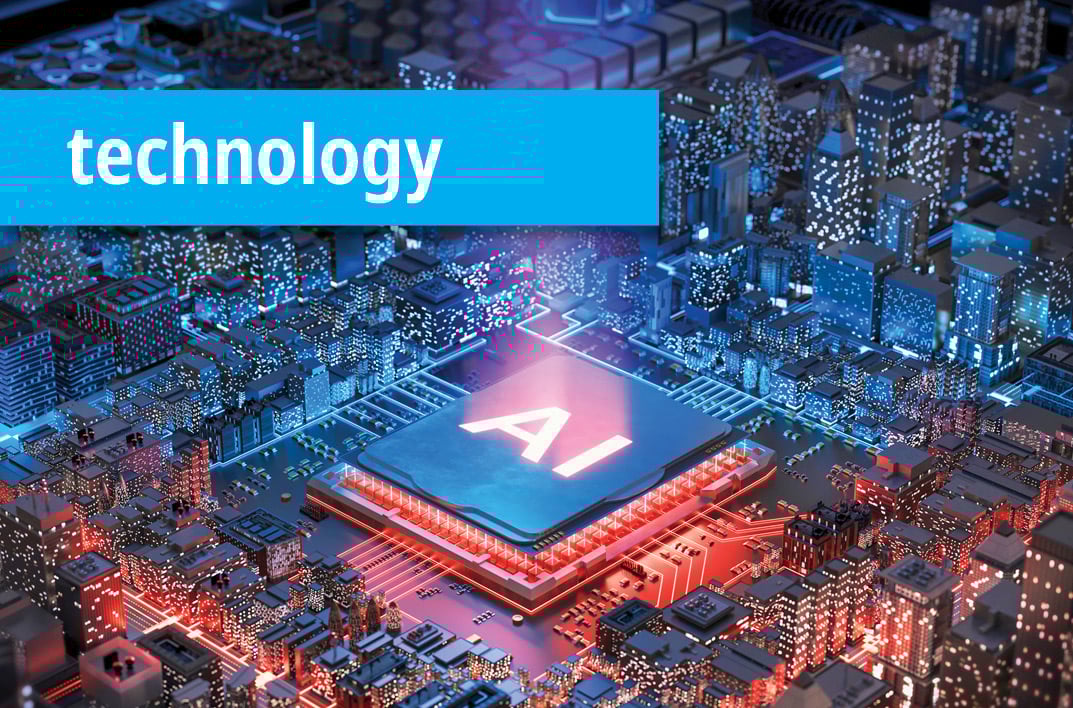
The global AI supply chain has evolved beyond the procurement of high-performance graphics processing units (GPUs). Right now, the biggest thing holding AI back isn’t a lack of smart code — it’s a lack of power.
Aging power grids simply can’t keep up with how fast AI is growing. Because the wires are maxed out, companies must get creative about how they find energy and where they build their data centers.
The “transmission grid bottleneck” is now a significant supply chain risk. To mitigate this, infrastructure providers and researchers are exploring three primary avenues: (1) “behind-the-meter” energy independence, (2) grid-enhancing technologies and (3) orbital data centers.
The Transmission Grid Bottleneck
Historically, electrical grid planning accounted for an annual load growth of 1 percent to 2 percent. The emergence of AI “factories” — single campuses requiring gigawatt-scale power — has led to these projections being exceeded. In major global data center hubs, interconnection queues now range from seven to 10 years, stalling new construction.
The challenge is often not generation capacity, but rather transmission infrastructure.
Standard “hub-and-spoke” grids were designed for distributed residential loads. The lines can literally overheat when massive amounts of power are pushed through old wires to feed AI factories. This drives the equipment to its physical breaking point, which introduces serious risks and safety hazards.
Grid-Enhancing Technologies
Rather than waiting for new physical lines, operators can deploy technologies to increase the capacity of existing wires. These are:
Dynamic line rating, which uses real-time sensors and AI to monitor wind speed and temperature, allowing utilities to safely increase power flow by up to 20 percent to 40 percent when conditions provide natural cooling.
Advanced conductors. In this scenario, utilities replace steel-core cables with advanced carbon-fiber composite cores, which can carry twice the current of traditional designs with significantly less “thermal sag,” enabling capacity upgrades without building new towers.
High-voltage direct current (HVDC). For massive AI rack requirements, HVDC systems are increasingly replacing alternating current distribution. HVDC reduces energy conversion losses by 10 percent to 20 percent, simplifying power architecture.
Behind-the-Meter Generation
Behind-the-meter solutions operate independently of the public utility grid. Advantages can include lower energy bills, assistance during peak hours and greater energy independence.
Solutions are:
Small modular reactors. There is significant industry momentum toward “clean firm” power. Advanced nuclear reactors have been deployed, while existing nuclear facilities are recommissioned to secure gigawatt-scale capacity for data centers.
Energy storage and hydrogen. Large-scale battery energy storage systems act as “shock absorbers” during high-intensity training runs. Additionally, academic studies are evaluating hydrogen fuel cells as a zero-emission alternative for on-site load balancing.
Orbital Data Centers
Orbital computing is emerging as a potential alternative for specific AI workloads. Missions like the launch of Nvidia startup Starcloud-1 have demonstrated the feasibility of utilizing GPUs for training in orbit.
Space-based infrastructure offers two major technical advantages:
- Solar efficiency. Orbital arrays can be up to eight times more efficient than terrestrial counterparts due to the lack of atmospheric interference.
- Thermal management. Heat is dissipated via radiation, eliminating the need for the millions of gallons of water required for cooling on Earth.
Strategic Opportunities
The evolution of AI infrastructure represents a fundamental shift for supply chain professionals, moving from IT inventory to complex energy and aerospace management.
- Energy procurement. Companies must shift from standard utility billing to complex power purchase agreements that guarantee priority access in constrained grids.
- Risk management. Energy availability is now a first-order risk. Interconnection pipelines must be monitored as leading indicators of regional downtime.
- Specialized sourcing. Demand is rising for radiation-hardened electronics. This market is projected to grow at a 6.5-percent compound annual growth rate through 2034, requiring new relationships with aerospace suppliers.
- Agile and flexible contracts. Buyers now have to plan ahead for “long-lead” gear like transformers, which can take as long as 18 months to arrive. This means procurement teams need to confirm orders much sooner to keep things on track.
The Need for Power Isn’t Going Away
Efficiencies like power usage effectiveness and water usage effectiveness have moved far beyond being simple “green” goals for a corporate report. Today, there are hard limits on how big a data center can get.
If a facility isn’t efficient enough with its electricity and water, it physically cannot scale up — it would get constrained through the grid or water supply. This makes it imperative to master the energy-water nexus.
In addition to energy concerns, there are other considerations in reducing supply chain risk, including building vertical redundancy. Ninety percent of executives report they would pay a premium for sites with pre-existing, reliable energy infrastructure.
Regulatory hurdles are another area organizations must navigate, as space-based equipment involves the International Traffic in Arms Regulations and strict export controls on specialized hardware that have different compliance frameworks.
Although energy shortages remain a long-term bottleneck, companies are addressing this challenge by combining smarter grid tech, on-site power plants and even data centers in space. In many ways, they are reshaping how the world’s technology is built and kept running.
Photo Credit:alvarez/iStock/Getty Images