‘No One Is Thinking’: The Dangers of Herd Mentality


A crucial aspect of our role as leaders in 2026 and beyond is to create an environment where people can do a great job, where teams can collaborate effectively, and where organizations can continue to be relevant and successful in their spheres.
This means that there needs to be effective decision-making, which in turn means coming to agreements with others, which all sounds brilliant. However, there are also dangers lurking in this space, as the drive toward agreement and decision-making may undermine real, diverse, critical and creative thinking. There’s a real danger of being tripped up by groupthink.
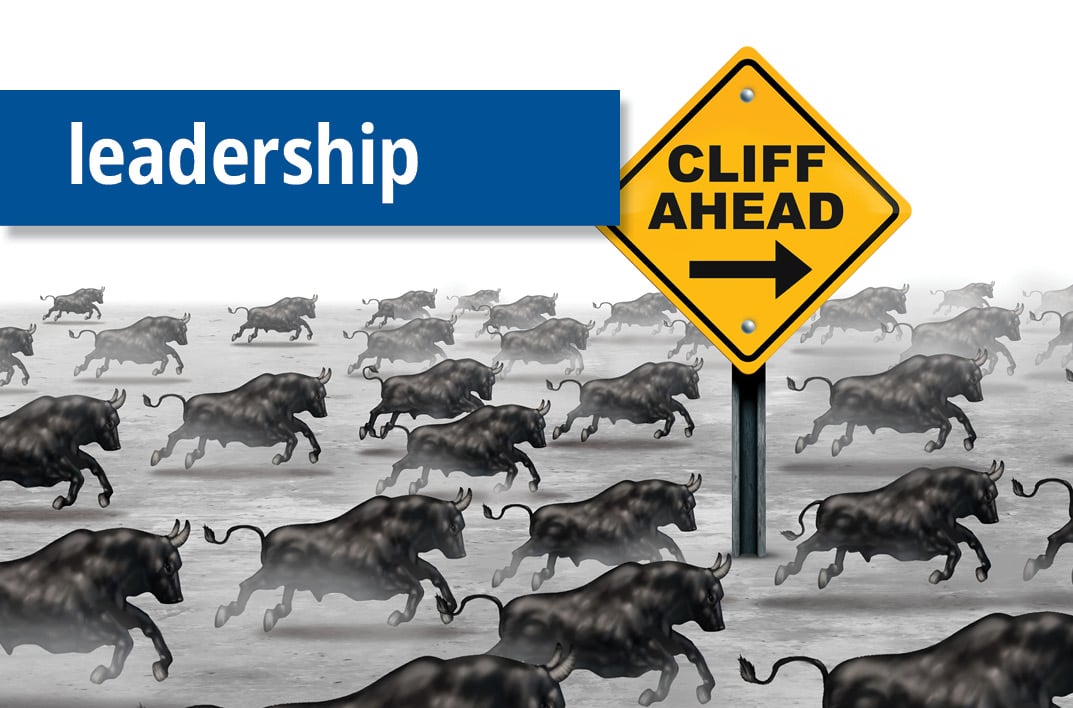
Group bias can occur where teams and leaders have similar personalities or similar styles. Team members become comfortable with each other and believe, “It’s great and we all agree, so it’s easy since we all think the same.” The reality is that because other styles and thoughts have not been considered, it is not a balanced and considered view. This becomes dangerous and a risk to the business.
If we add the potential for unconscious bias in this situation, that bias multiplies and we get “groupthink bias” or herd mentality. As an example, a leadership team we worked with thought it made decisions quickly; members took pride in that and said that it allowed them to move quickly. However, when those decisions were communicated to the wider organization, the team realized it employed only one way of thinking — and critical areas of importance and difference had been overlooked.
This groupthink from the leadership team didn’t speed up decisions; it slowed down the process. It impacted change as the wider teams had questions and were reluctant to implement the changes without more input. As we worked with the leadership team, it realized that people can nod politely and appear to agree — but then not deliver.
Yes, herd mentality or groupthink at work undermines critical thinking, stifles creativity and leads to poor decision-making. The core issue is that group members prioritize consensus and harmony over rigorous analysis and open discussion, which can lead to adverse outcomes.
Poor Decision-Making and Other Consequences
When everyone thinks the same, no one is thinking. There is a tendency to ignore important information and risks, leading to poor decisions. Team members may hold back on sharing doubts or alternative ideas to avoid conflict, resulting in a lack of thorough evaluation of options.
Other consequences of herd mentality include:
Not enough diverse perspectives. When differing or opposing views are silenced or self-censored or simply not sought, the team misses out on other perspectives and potential solutions. This is particularly true in teams where people share similar backgrounds and experiences, meaning there’s not enough diversity.
Being too confident. Groupthink can create a false sense of certainty, and teams become overconfident in their choices and less prepared for adverse outcomes.
Creativity and innovation suffer. Pressure to conform discourages creative thinking and new ideas, which, of course, are crucial for any organization that wants to stay relevant in a fast-paced world. Research repeatedly shows that the most creative and innovative teams are those with diversity across such areas as age, gender, background, experience, personality, culture, nationality and more. And this makes so much sense — if everyone has similar traits, it’s unlikely that they will produce new thinking.
Unhealthy work environment. Employees who feel their opinions are unwelcome may become disengaged, leading to lower morale, reduced productivity and even higher turnover.
Yes, groupthink is bad for business. Unanimous decisions based on intelligent debate are one thing, but when there’s no room for alternate views, you’re in trouble. Groupthink sacrifices decision quality, innovation and employee engagement for the sake of superficial harmony and speed, often with costly consequences for organizations.
Overcoming Groupthink
Make time for thinking. This is crucial both for leaders and their teams. Jobs are increasingly ‘knowledge jobs’ and dependent on people’s ability to think creatively and critically. This also means that thinking needs to be scheduled in your calendar and in your team’s calendar.
Also, break free of old ways of thinking. Challenge your existing assumptions on a given topic. Imagine that you are someone else: Try to think how someone whose intellect and leadership skills you admire would. Zoom in and out on the topic — think about the big picture, study a specific detail and see where those perspectives take you. Engage in disruptive thinking to creatively question norms.
Dare to be challenged — and be wrong. Invite those who are very different from you into the conversation. Seek out those who you know will challenge you and, at times, even frustrate you. Listen with a curious mind and let go of the need to be right. Allow yourself to really take in what’s being said, even if you are at first tempted to challenge it. Assume that there is good intention and explore the value of a contributed idea.
Additionally, encourage and praise others for daring to think independently. Encourage them to think critically and creatively. Reward and recognize different thinking, point it out, elevate and showcase it. Demonstrate the difference it makes, the impact it has and the value it adds. Celebrate the courage to think differently.
Photo credit: wildpixel/iStockr/Getty Images Plus