
Supply Chain News Roundup: Risk as a Driver for Decision-Making

Risk, not just cost, is the new influencer when it comes to supply chain decision-making. In today’s volatile environment, risk is guiding decisions on sourcing, strategy, suppliers, logistics and more.
A new report by Coface, a French trade credit insurance and business risk intelligence provider, found that organizations generally don’t take chances when it comes to new markets and expansion decisions. More than half (57 percent) of the respondents to the 2026 Risk Survey: Risk Management from Risk Control to Growth Engine say they feel safer turning down an opportunity than building a case for it.
However, the use of AI may change that percentage. The report, which surveyed 1,250 senior risk and finance leaders, found that 80 percent think that AI will give them the confidence to say “yes.”
Expansion to new markets can cause alarm bells for executives, depending on their approach and risk visibility. The survey found that when contemplating a new market:
- 31 percent of respondents lead by considering what could go wrong
- 17 percent say they lead by looking for a path forward
- A third will enter a new market without a complete view of the risks.
“When finance and risk leaders say they would rather walk away from an opportunity than risk getting it wrong, they are responding to a system that was never built to make uncertainty feel manageable,” Christina Montes de Oca, North America CEO at Coface, said in a press release. “The problem is that AI alone will not fix that. What companies actually need is better intelligence feeding AI tools, and the organizational confidence to act on it.”
Among other survey findings, risk has yet to get an influential seat at the table. “Risk is involved at the idea stage at 29 percent of U.S. firms, above the global average of 24 percent, and 78 percent say leaders balance growth and risk,” the press release stated. “Yet only 28 percent see risk teams as growth partners, while 42 percent still call them ‘trusted guardians who protect the business from downside.’ ”
However, that sentiment is likely to change: More than half (51 percent) of respondents predict that risk and finance will be strategic growth partners within five years.
Good Outlook for Warehousing
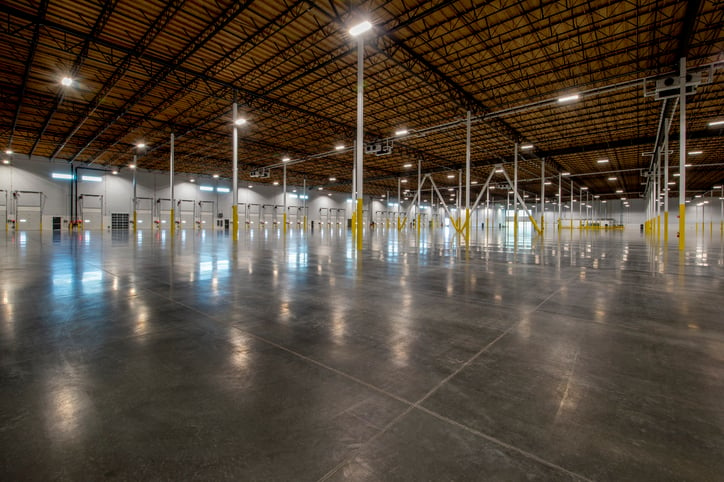
The warehouse/industrial construction pipeline is up, reaching the 300-million-square-feet mark for the first time in two years, according to Cushman & Wakefield’s Q2 2026 U.S. Industrial Report. The second-quarter pipeline increased 18 percent year over year, registering 305.1 million square feet. The amount is still well below construction levels reached in 2022.
Another good sign: In the second quarter, the national vacancy rate dropped slightly to 6.9 percent, signaling that “vacancy has likely passed its cyclical peak as demand begins to outpace new supply,” the report states.
Additionally, demand is up, with absorption increasing 21 percent compared to Q1 (to 62.1 million square feet) and reaching 113.6 million square feet over the first two quarters, the strongest first half in three years. “Demand remains concentrated in facilities built since 2020 and those exceeding 500,000 square feet,” the report states.
Cushman & Wakefield anticipates that vacancies will tighten, with net absorption having the best year since 2023 and newer facilities outperforming.
The Costs of Manual Processes
Manual processes and reactive decision-making are costly — to the tune of hundreds of thousands of dollars a year.
A survey of more than 400 engineering and supply chain professionals from various industries found that 58 percent of respondents say they spend more than 30 hours a month manually extracting component datasheet data. Half (49 percent) devote more than 11 hours a week — 44-plus hours a month — transferring data across ERP, computer-aided design and product life-cycle management systems.
Sponsored by engineering/supply chain platform provider Accuris and conducted by Fuld & Company, the survey queried professionals in the aerospace and defense, electronics, automotive, medical devices, and industrial manufacturing industries. Other findings:
- Rework costs add up to US$250,000 per project (85 percent)
- Reactive supply chain decisions exceed more than $50,000 a year (72 percent)
- Nearly two-thirds (62 percent) incur compliance violations after the design phase
- Forty-one percent say they don’t have visibility into the supplier country of origin and fabrication locations.
“When 85 percent of teams face up to $250,000 in rework costs and more than half are changing components after the design freeze, we’re looking at a systemic gap in how engineers access parts intelligence,” Greg Jaknunas, senior director of product, supply chain intelligence at Accuris, said in a press release.
(Photo credit: Getty Images/Alacatr)