
Why Checking Serial Numbers at the Warehouse Door Is Too Late

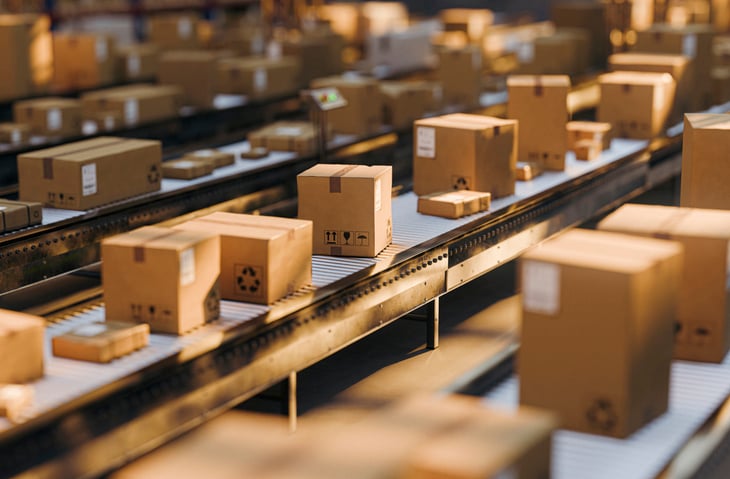
Picture a Friday afternoon at a regional distribution center. A truckload of 2,000 high-value electronics kits arrives from an overseas contract manufacturer, right on time for a major customer promotion.
Every pallet looks perfect on the outside. Then a receiving associate scans the first carton, and the warehouse management system (WMS) flashes an error, a duplicate serial number.
Three pallets later, another alert appears: A bundled starter kit that is supposed to contain one main device and two serialized accessories only has two serial numbers recorded on the advance shipment notice (ASN).
Suddenly, the entire 2,000-unit shipment is routed into a quarantine cage. Warehouse staff spend the weekend opening boxes by hand, procurement managers trade urgent emails across time zones with the factory, and finance holds the supplier’s invoice. The products were built on time — yet the supply chain came to a halt because of a digital identity breakdown.
Even worse, the same identity gap haunts the other end of the supply chain: the warranty repair depot.
Across high-tech, automotive, medical-device and industrial equipment supply chains, organized gray-market operators buy genuine products, strip out expensive internal parts (like displays, batteries or circuit boards), replace them with cheap counterfeits, and return the resealed “Franken-device” for a full warranty replacement. If the return center scans only the barcode on the outside of the casing, the fraud sails right through.
Why Traditional Traceability Fails
Most companies have already assigned serial numbers at the factory. So, why do these errors still happen? Because in traditional supply chains, serial numbers are captured at the factory but validated at the warehouse.
When a contract manufacturer generates an ASN after the pallets are already shrink-wrapped and loaded onto a truck, any data mistake travels with the freight. Fixing a bad serial number at the factory packing station takes 30 seconds; fixing that same error 6,000 miles later at a third-party logistics (3PL) warehouse takes days of manual labor.
With the European Union’s upcoming digital product passport (DPP) mandate requiring item level life cycle and repair records across electronics, batteries and industrial goods, supply managers can no longer afford to clean up product identity after the fact.
A Simpler Approach
To close this gap without slowing down factory lines, supply chain teams can pair two straightforward controls — a gate check (at the factory shipping dock) and birth check (inside the product itself).
Think of the two controls like airport security and a passport:
The pre-departure gate check. Airlines do not wait until a passenger lands in Tokyo to check whether their boarding pass is valid; they check it at the departure gate before the plane pushes back. Under a gate check, the supplier’s system must pass a quick, automated multi-point validation check before the system prints the pallet shipping label or accepts the ASN:
1) No missing or malformed serials. Every serialized SKU carries a valid serial number or cellular IMEI check digit.
2) No duplicates — anywhere. No serial number is repeated inside the shipment or across any previous shipment in the last 12 months.
3) Complete kit boxes. If a retail bundle requires one host unit and two accessories, the system verifies that all three child serials are linked to the parent box before the carton is sealed.
4) Exact head count. The number of individual serial numbers matches the total quantity on the PO line. If a single carton fails, the packing station alerts the operator immediately while the box is still open on the table — preventing a dirty shipment from ever leaving the dock.
The component birth check. When a product is assembled on the factory line, the system records a simple digital “birth certificate” that links the outer enclosure serial number to the serial numbers of its key internal parts (for example, the main logic board, battery and screen). When a unit comes back for warranty repair six months later, the technician scans both the outer case and the internal parts.
How It Works
Imagine a supplier is shipping 500 smart diagnostic tablets. Each is packed in a kit box with a serialized charging dock and a serialized sensor wand, meaning there are 1,500 serialized items in total.
At the factory dock (gate check). While scanning carton No. 42, a worker accidentally scans the same sensor wand twice and forgets to scan the charging dock. Under the old process, carton No. 42 would ship out and block receiving at the warehouse next week.
With a gate check, the screen flashes red at the pack table: “Carton No. 42 missing a charging dock serial; duplicate sensor wand serial.” The worker rescans the right part in 15 seconds, and all 500 kits arrive at the warehouse with 100 percent clean receiving.
At the repair depot (birth check). Three months later, Tablet SN-104 is returned under warranty for “no power.” When the repair tech opens the unit and scans the internal battery and circuit board, a birth check compares them against SN-104’s factory birth record (plus any authorized repair history).
The system immediately flags that the internal circuit board actually belongs to a scrapped unit from a different batch — catching a harvested “Franken-device” before an unauthorized warranty credit is issued.
Three Steps Supply Managers Can Take Now
You do not need a multi-year ERP overhaul to put these guardrails in place:
- Move ASN validation ahead of physical departure. Require contract manufacturers to validate serial uniqueness and kit completeness via an application programming interface or EDI pre-check before generating the final pallet label.
- Track kits as parent-child families, not flat lists. Make sure your item master specifies exactly which child SKUs belong inside every bundled kit, so incomplete bundles are caught at the pack station.
- Link top-tier internal components at birth. Start by linking just the two or three highest-value internal sub-assemblies to the main unit serial number at factory test — giving your warranty and compliance teams an instant foundation for both anti-counterfeiting and digital product passport readiness.
(Photo credit: Getty Images/Luza Studios)